

Our passion is air - in the truest sense of the word. In our air quality blog, we write for you about current topics related to breathing air, indoor air and sensors and air quality. For example, we classify the results of new studies on the health effects of polluted indoor air or provide information on limit values. In addition, we also work on our own studies with real-time data from our own air measuring device air-Q. The blog is therefore a guidebook, reference work and important source of information for well-founded facts about air quality.

We tested the stylish Dyson Pure Humidify + Cool humidifier, air purifier and fan. The device is big, heavy and promises pure performance. We mainly tested the air purification function of the device with regard to aerosols with the help of two air-Q Pro with 14 sensors. Among other things, particulates, VOCs and humidity were measured.
→ Learn more
What do you associate with a holiday at the Baltic Sea? Sun, sea, beach and the fresh, good sea air perhaps? We took the air-Q with us on holiday and measured surprisingly high particulates values on the coast.
→ Learn more
With the development of the air-Q, we are fully dedicated to the fight for healthy indoor air. To be able to fight this battle even more efficiently, we are also always on the lookout for promising competitors. In doing so, we keep our eyes open for innovations such as air purifier technology that help us improve the quality of the air we breathe.
→ Learn more
How does air quality evolve during the Corona pandemic? Currently, data is often isolated and interpreted. But such analyses do not do justice to the complex interrelationships around pollutants. Now researchers have presented a deeper analysis that shows: The lockdown significantly reduces NO₂ pollution.
→ Learn more
The temperature level in rooms is often simply referred to as temperature. In recommendations for optimal temperatures, for example, it remains vague whether the air temperature or the much more meaningful room temperature is meant. To date, technical devices for controlling room air have mostly focused on the air temperature.
→ Learn more
Do districts with high air pollution have a higher Covid 19 death rate? The new study by scientists at Harvard University allows this conclusion for the USA - and should lead to short-term as well as general consequences with regard to air quality and the measurement of particulates .
→ Learn more
The pandemic leads to quarantine, contact and exit restrictions. Despite the approach of spring, we are spending more time indoors - and must be careful to stay fit and healthy. This article provides information on the sources of pollutants and how to improve indoor air quality.
→ Learn more
Can air pollution accelerate the spread of viruses such as the coronavirus? Evaluations by Italian researchers suggest so. They have found correlations between particulates (PM2.5, PM10) and the spread of COVID-19 in northern Italy. Therefore, they call for restrictive measures to combat pollution.
→ Learn more
House dust, a mixture of various organic and inorganic particles, can seriously damage our health. Causes can be natural or human. The blog article provides information on what domestic dust is, what effects the particles have - and how we can protect ourselves from the consequences.
→ Learn more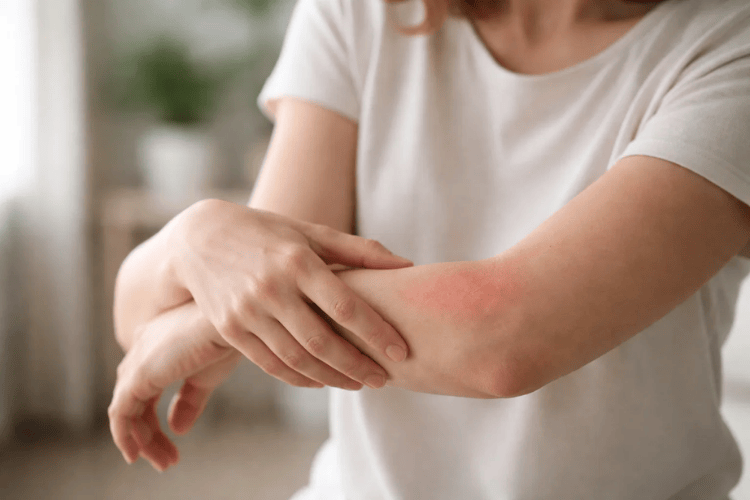
Air pollution is a risk factor for allergic diseases. Bad air pollutes the respiratory tract and can be a trigger for allergic asthma and hay fever. In addition, the skin, the largest human organ and the only barrier against environmental influences, also suffers: Air pollution is also a risk factor for neurodermatitis.
→ Learn more
Efforts to reduce particulate matter pollution in cities caused by traffic are bearing fruit across Germany: reports of lower particulates concentrations are accumulating. Despite this good news, there is no all-clear in terms of air pollution. The reason for this: Volatile organic compounds, or VOCs for short.
→ Learn more
Dry air is a problem especially during the winter heating period: On the one hand, too low room humidity worsens the all-important feeling of comfort. On the other hand, it leads to an increased risk of infection - for example with flu viruses. For this reason, a trade association has launched the Minimum Humidity 40 Percent campaign.
→ Learn more
Laser printers and copiers are an often underestimated factor for healthy breathing air in the office - they emit particulates, nanoparticles and pollutants. In this interview with Heike Krüger from the nano-Control Foundation, we talk about health risks, education and a current campaign.
→ Learn more
Millions of people around the world suffer from allergic asthma and are familiar with the oppressive feeling of not being able to breathe easily. But how exactly is bronchial asthma defined, what are the typical symptoms and causes, and what can help to alleviate it in addition to prescribed medical treatment?
→ Learn more
The pollutants in the air can affect our health and trigger or intensify allergies, for example. Our lungs are one of the most obvious sufferers. But the nerves and not least the skin also suffer from air pollution. What types of allergies are there, what is anaphylaxis and what role do histamines play?
→ Learn more
In Germany, air quality at the workplace is governed by the Workplace Ordinance - specifically the workplace regulations. However, "healthy air to breathe" is often not very good in the office. On the contrary, the air is thick, especially in open-plan offices. How is it possible to ensure their performance through a good indoor climate?
→ Learn more
How can pollutant emissions in cities be reduced sustainably? The public debate focuses too much on the mobility revolution. But the air we breathe, especially in residential areas, is not only polluted by traffic: In the winter months, heating with wood, coal and pellets contributes to increased particulates- and pollution.
→ Learn more
Everyone knows it: noises such as loud music, an aeroplane or a train trigger different reactions. Noise is perceived subjectively by everyone. But one thing is clear: noise affects our health because we cannot get used to it. But which noise sources are particularly harmful, and how is noise actually measured?
→ Learn more
The European Environment Agency (EEA) has examined air pollution in Europe in its annual report. The evaluation of 4,000 measuring points showed that air pollution caused by particulates, nitrogen dioxide and ground-level ozone endangers the health of the vast majority of city dwellers. What can be done about it?
→ Learn more
Many of the dangers posed by air pollutants such as particulates are undisputed and well known. But besides these health reasons to do more for good air quality, there are also economic reasons: The solar yield can be significantly reduced by air pollution and particulates - and that in two ways.
→ Learn more
The debate about air quality and appropriate pollutant limits is ongoing. In addition to CO₂ and particulates, nitrogen dioxide (NO₂) is a particular focus. But the existing limit values confuse citizens and experts - which limit values are there, and what applies in which situation?
→ Learn more
People living in forested areas may still be exposed to smoke and polluted air even after the immediate danger has passed. Closing windows reduces exposure, but does not completely block out fine smoke particles. Learn which air components are relevant, how you can improve indoor air quality, and how you can monitor your air quality with air-Q.
→ Learn more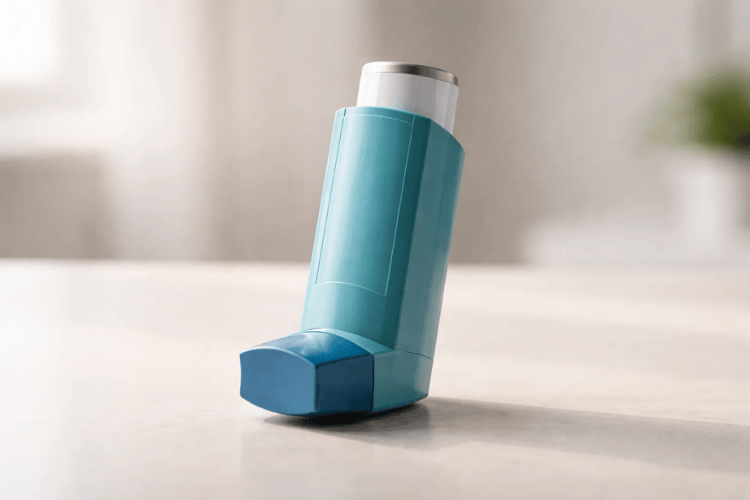
The link to childhood asthma is clear: one in ten new cases of asthma in Europe could be prevented if countries complied with the WHO limits for PM2.5. If there were clean air, even one in three.
→ Learn more
Continuous inhalation of bad air poses significant health risks that vary by income and gender, according to the central finding of a new study by Imperial College in London.
→ Learn more
Carbon monoxide is a treacherous gas because it is colourless and odourless. The trend towards wood-burning stoves and heavily insulated homes increases the danger of carbon monoxide poisoning. The article shows causes, symptoms and therapies - and introduces the CO alarm and air analyser air-Q.
→ Learn more
What exactly does crowdfunding mean? And what advantages does Kickstarter offer for providers and supporters? In the following, you will learn what crowdfunding is all about, why we choose this model and how you can support us.
→ Learn more
The ongoing discussion about traffic-related air pollution brings nitrogen oxides to everyone's attention. But high concentrations of nitrogen dioxide can also occur indoors, which can lead to additional serious health problems.
→ Learn more
Headaches, fatigue and concentration problems - indoors, one substance in particular is responsible for this: carbon dioxide. Even in small quantities, it leads to performance deficits and only becomes noticeable when the substance load is too high.
→ Learn more
To test the qualities of our air-Q in practice, we took test measurements in a primary school in June 2018. For the measurement period from 18 to 19 June 2018, air-Q accompanied the school lessons on those hot summer days out of the reach of children's hands.
→ Learn more
The influence of air quality on our health and performance cannot be underestimated. Outdoor air is regularly checked in Germany. But there are hardly any meaningful measuring instruments for indoor air quality.
→ Learn more


