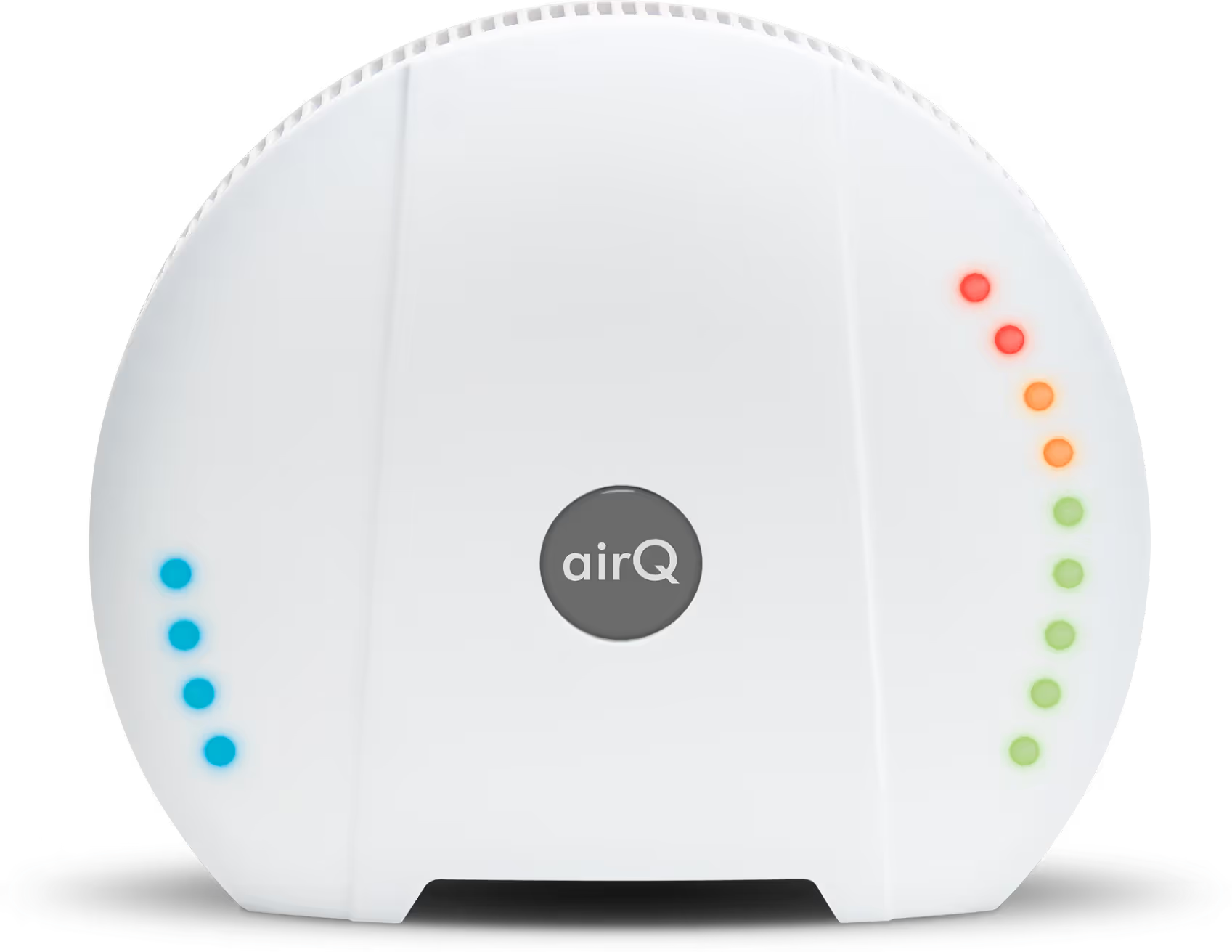
air-Q Radon — patented technology for measuring radon
Radon releases radioactive particles known as alpha radiation. This dangerous noble gas is the second leading cause of lung cancer, after smoking. It rises from the ground or construction sites, can even pass through the walls of houses, and is undetectable by human senses. With the new air-Q Radon, you can detect this radioactive gas in your apartment, your home, and at your workplace. The air-Q Radon also supports up to 10 additional sensors and functions as a smart air quality monitor.
Buy air-Q radon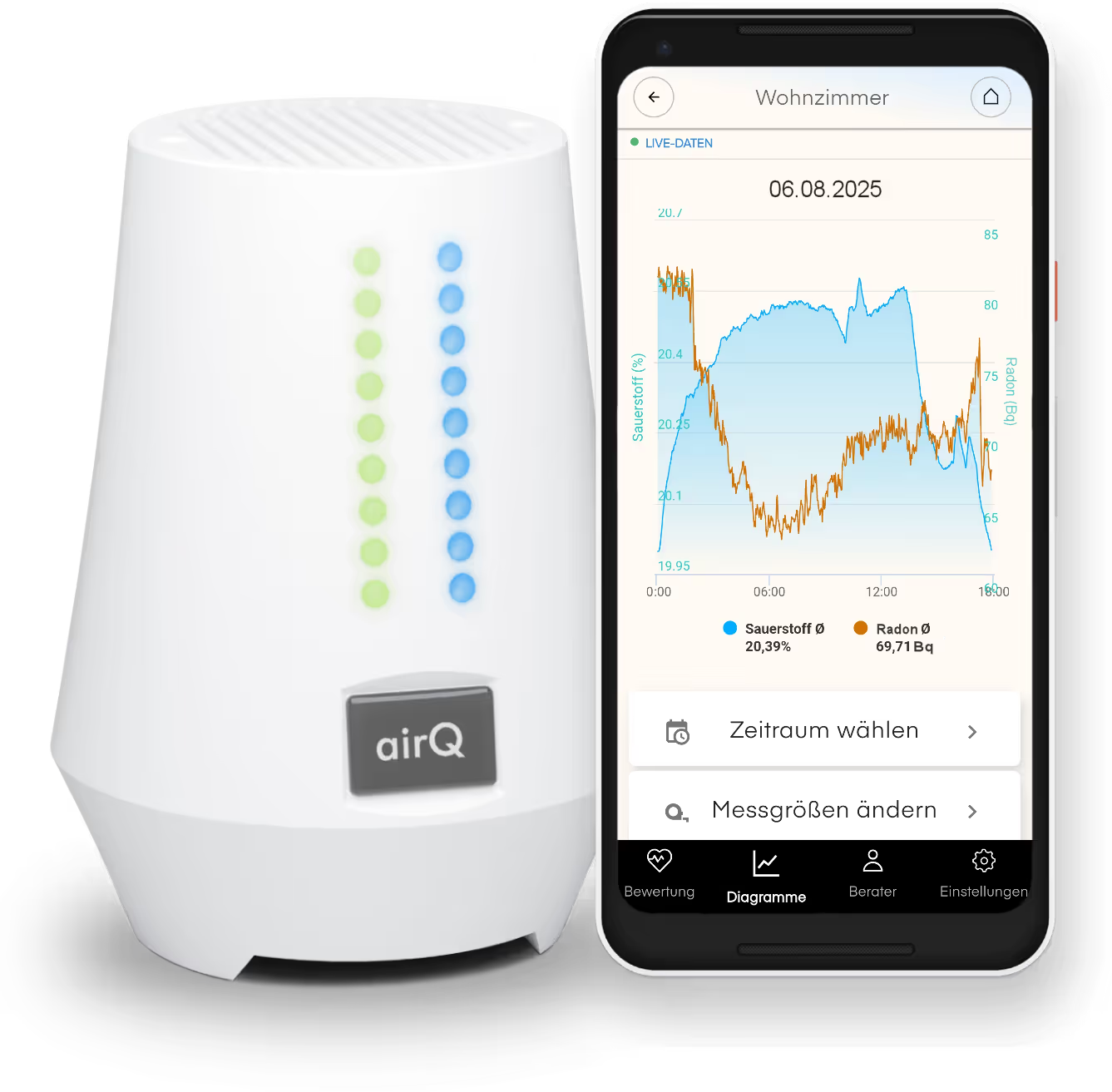
What is radon?
Radon is a naturally occurring radioactive noble gas produced by the decay of uranium in the soil. It is colorless, odorless, and tasteless, and can enter indoor spaces through leaks in buildings (such as cracks in the foundation). There are two relevant isotopes of radon—radon-222 and radon-220 (thoron)—both of which are detected by the air-Q Radon measurement module.
Radon can accumulate particularly in poorly ventilated basements. Long-term exposure to high levels of radon increases the risk of developing lung cancer.
EU directives set the legal limit at 300 Bq/m³, while the WHO sets it at 100 Bq/m³. In general, the less you are exposed to radon, the better.
1. Patented air-Q Radon modules
When radon decays, alpha radiation (α particles) is emitted. These particles consist of helium nuclei (2 protons, 2 neutrons) and have a very short range (a few centimeters in air), but a high ionizing power.
After several years of development, we were able to develop our own radon measurement module. Radon is quantified in this module by detecting light pulses from a scintillator material. Alpha particles are then detected indirectly through their interaction with the scintillator, which produces flashes of light when ionizing radiation strikes it; these flashes are counted and thus measured. The scintillator is housed in a measurement chamber that is permeable to gas but opaque to light. The flashes of light are detected by a modern, highly sensitive photon sensor called a SiPM (Silicon Photomultiplier), capable of detecting even individual photons. The number of light flashes (corresponding to radon decay events) per unit of time provides information on the radon concentration and is converted into becquerels per cubic meter. The radon module developed is the subject of a patent application (EP23176915.9 / 4 471 462).
2. Calibration of the radon measurement module
Our radon modules are individually calibrated at our factory using measuring instruments that have been verified in accordance with the requirements of DAkkS (Deutsche Akkreditierungsstelle, the German accreditation body) in a calibration laboratory (Sarad). The calibration standards have thus been tested and calibrated for 300, 3,000, and 30,000 Bq/m³. All air-Q units undergo a complete measurement cycle lasting several days and are assigned individual calibration values for sensitivity and baseline. The testing is conducted according to strict, standardized procedures to ensure their accuracy, repeatability, and linearity.
3. Challenges in Radon Measurement
a. Measurement speed and accuracy vs. sensor size
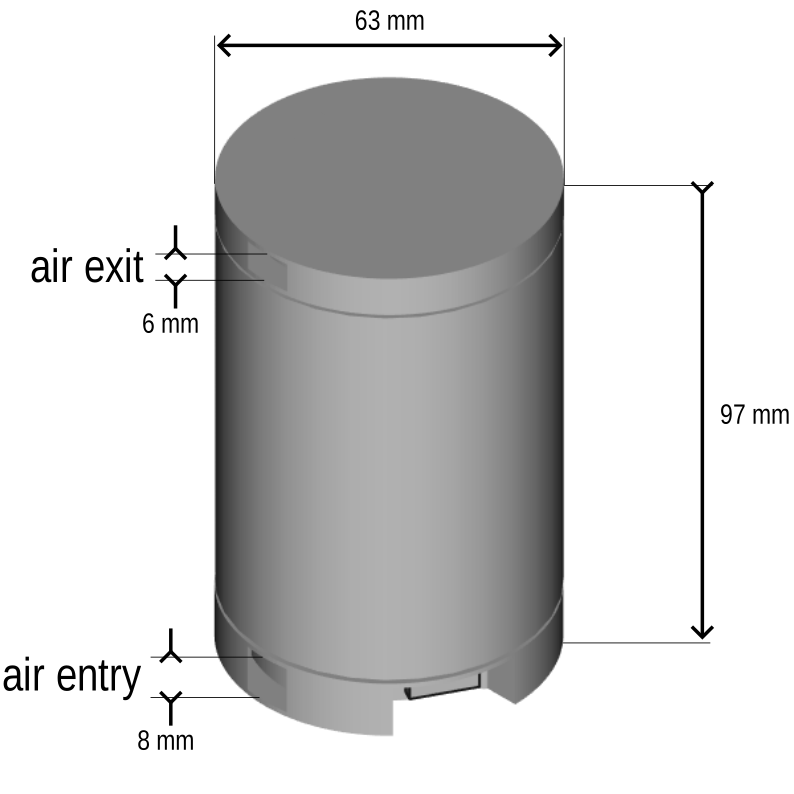
One becquerel corresponds to one radioactive decay per second. The standard unit of measurement is the becquerel per cubic meter—thus, the German Federal Office for Radiation Protection (Bundesamt für Strahlenschutz) sets a limit of 300 Bq/m³. Typically, radon measuring devices must be significantly more compact, or even portable, so that measurements are taken in a volume significantly smaller than 1 cubic meter (a cube measuring 1 x 1 x 1 meter)—for example, 200 cm³ (0.0002 m³). If one wishes to measure using a sensor with a small measurement chamber, the response time, measurement resolution, and accuracy decrease accordingly. The challenge lies in developing a measurement chamber or measurement method that enables high-quality, comparable real-time measurements. That is why, for the air-Q Radon, we opted for a relatively large chamber. In addition, the measurement module operates with optimized passive ventilation of the measurement chamber, enabling it to provide measurement values in a relatively short time that also respond quickly to environmental conditions such as ventilation.
To illustrate how many decays per unit volume must be detected, we have provided an overview here. Thus, 50 Bq/m³ corresponds to 3,000 radioactive decays per cubic meter, but only 0.6 decays per minute.
Radioactive decays per unit volume and per minute
Radon concentration | Decays per 1 m³ per minute | Decays in 200 cm³ per minute |
|---|---|---|
50 Bq/m³ | 3.000 | 0,6 |
100 Bq/m³ | 6.000 | 1,2 |
300 Bq/m³ | 18.000 | 3,6 |
1,000 Bq/m³ | 60.000 | 12 |
b. Averaging algorithm required for measurement in small volumes
Radioactive decays are statistical processes. There is therefore a certain probability of a decay occurring. In the case of low radon exposure, one more or one fewer radioactive decay in a small measurement volume can result in the measured value being doubled or halved (and thus a possible overestimation or underestimation of the actual radon exposure). An averaging mechanism is therefore necessary to obtain a continuous measurement curve. At the same time, averaging results in a reduced response capability. A sophisticated mechanism is therefore required. For the air-Q Radon, an adapted Kalman filter was used.
The Air-Q Kalman filter helps calculate estimates that are as accurate as possible based on just a few measurement points. It combines past values and trends with current measured values. Each new measurement is used to improve the previous estimate. The filter operates in stages and continuously updates its estimate with each new piece of information.
c. Radon and thoron measurement
Most radon detectors are designed/calibrated for radon-222. This is the most common radon isotope and, in practice, poses the greatest health risk.
Building materials that may contain thorium can emit thoron (radon-220). This includes, for example, clay plaster, pumice, natural gypsum, tuff, and fly ash cement. Thoron then escapes to the surface and decays extremely rapidly due to its short half-life (55 seconds). It can therefore only travel a few centimeters away from the material during this time and is detectable only in the immediate vicinity of the aforementioned building materials. The air-Q Radon measurement module cannot distinguish between radon-222 and radon-220; both are reported together as the measured value “radon.”
Certified Quality

The WELL standard is an international rating system for building certification, developed and regulated by the International Well Building Institute (IWBI) in the United States. It is the first standard of its kind to focus exclusively on the health and well-being of people in buildings and to establish high standards in this regard. air-Q meets the high standards that WELL imposes for air quality measurement and is certified by the IWBI.
Our Partners in Sensor Development
Together with numerous partners, we are developing the air-Q air analyzer and the air-Q app to improve people’s health and performance. Our development partners are particularly important; we work with them every day to create new solutions for healthy, mindful breathing and living.