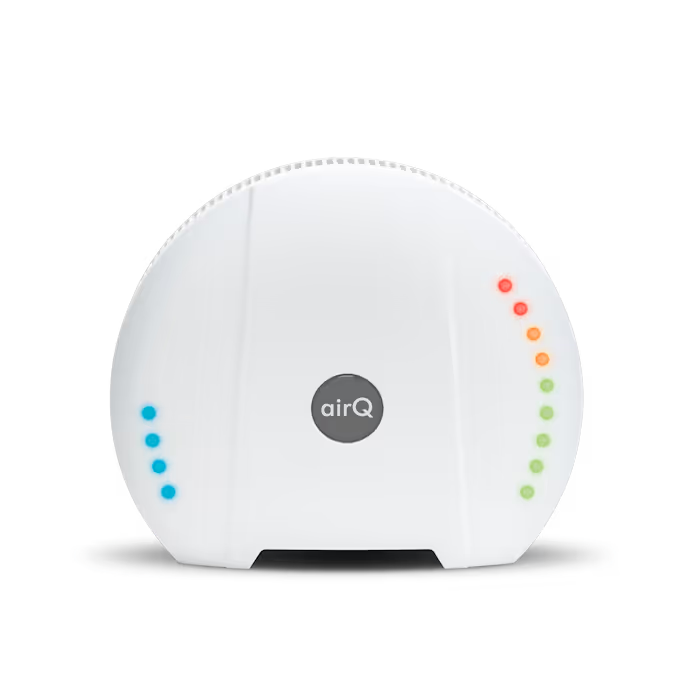
It's good to know what's in the air.
L’air-Q analyzes air quality and detects fine particulate matter, carbon monoxide, chemicals, radon, and other pollutants.


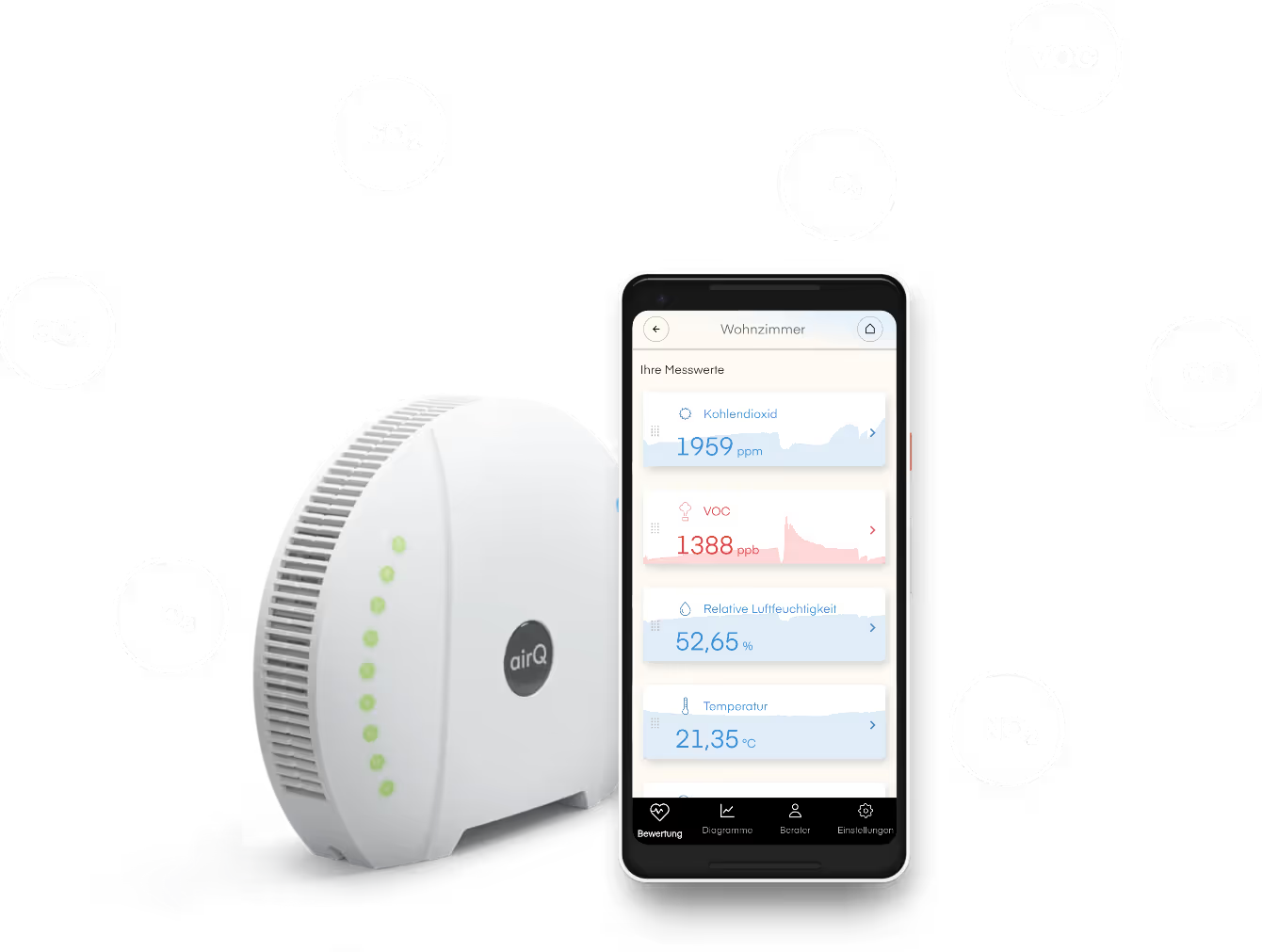
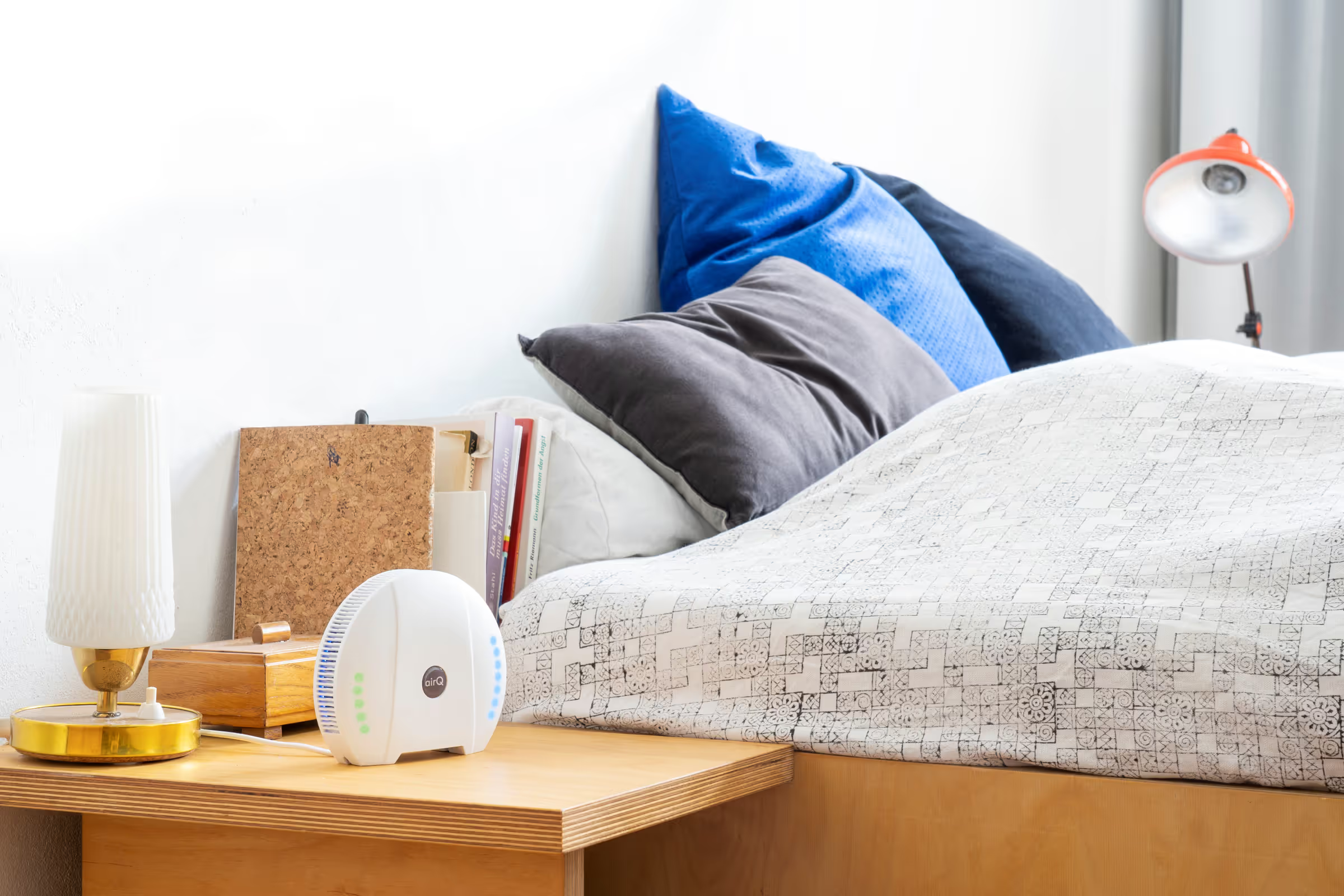
No one has any sensors left—measure all the components of the air.
air-Q captures and monitors air quality in real time and analyzes it based on its impact on your health and performance. Learn more about the components of the air you breathe. There are different versions of air-Q equipped with various sensors.
Our measured values / sensors:

Hydrogen (H₂)
Hydrogen exists in a stable form only as molecular hydrogen (H₂), a colorless, odorless gas. It reacts rapidly with oxygen (O₂) to form water, releasing energy. H₂ is not toxic, but it is flammable and explosive.

Volatile Organic Compounds (VOCs)
VOCs (volatile organic compounds) are carbon-containing organic compounds that evaporate even at low temperatures. In many cases, VOCs are largely harmless to living organisms—despite their impact on well-being. However, this group of substances also includes substances that are hazardous to health, such as formaldehyde.

Air Temperature (T)
Air temperature has a significant influence on the rate of chemical processes and, therefore, on human metabolism. It is therefore advisable to measure it. Temperatures that are too high or too low can have a negative effect on mental or physical health.

Dew point (Td)
The dew point refers to the temperature at which the relative humidity of the air reaches 100% and at which the water vapor in the air would immediately begin to condense into water.

Nitrogen dioxide (NO₂)
Nitrogen dioxide (NO₂) belongs to the group of nitrogen oxides. It is a reddish-brown gas with a pungent odor similar to that of chlorine. NO₂ severely irritates the respiratory tract and contributes to asthma.

Hydrogen sulfide (H₂S)
Hydrogen sulfide is a colorless, foul-smelling, highly toxic gas that is combustible and highly flammable. It has the characteristic odor of rotten eggs and is produced by the decomposition of proteins derived from sulfur-containing amino acids by putrefactive and sulfur-producing bacteria.

Sulfur dioxide (SO₂)
Sulfur dioxide is a colorless, irritating gas with a pungent odor and a sour taste; humans can detect it at concentrations ranging from 0.8 to 4.0 mg/m³.

Oxygen (O₂)
Molecular oxygen (O₂) is a colorless, odorless gas that makes up 21% of the air. On the Earth's surface, oxygen is—by mass—the most abundant element.

Radon (Rn)
Radon is a noble gas whose decay releases radioactive particles (known as alpha radiation).

Ozone (O₃)
Ground-level ozone (O₃) is formed by the reaction of oxygen, nitrogen oxides, and volatile organic compounds under intense solar radiation. Even at slightly elevated concentrations, it causes severe irritation of the mucous membranes and respiratory tract.

Methane (CH₄)
Methane is a flammable gas and the main component of heating gas.

Relative humidity (ρ)
Air humidity refers to the proportion of water vapor in the gaseous mixture that is air. Air humidity that is too high or too low in indoor spaces can have a negative impact on human well-being and health.

Absolute humidity of the air (φ)
Absolute humidity describes the density of water vapor—that is, the mass of water vapor contained in a given volume of air.

Atmospheric pressure (p)
Atmospheric pressure results from the continuous movement of air masses. As a component of atmospheric environmental conditions, it directly influences human health and well-being.

Lumière / Illuminance (lx)
The light sensor measures light intensity by detecting the brightness of incident light and converting it into a digital signal. It takes into account only the portion of the light spectrum that is perceptible to the human eye and ignores infrared and ultraviolet radiation.

Maximum noise level (Lp_max)
Unlike the “normal” noise level, which reflects background noise, the maximum noise level reflects sudden loud events—such as a loud, brief noise during the night. These events, as recorded by the maximum noise level, can abruptly interrupt rest periods and cause stress.

Bruit (LP)
Sound becomes noise when unwanted sounds are perceived as bothersome, unpleasant, or disruptive. As a psychosocial stressor, noise can significantly impair well-being and performance.

Laughing gas (nitrous oxide) (N₂O)
Nitrous oxide is a colorless, tasteless gas with a slightly sweet odor. Known as “laughing gas,” it is primarily used in medicine as a pain reliever and anesthetic.

Carbon monoxide (CO)
Carbon monoxide (CO) is produced, in particular, during the incomplete combustion of carbon-containing substances. This colorless, odorless, and tasteless gas is a powerful respiratory poison that quickly reaches dangerous concentrations in unventilated rooms.

Carbon dioxide (CO₂)
Carbon dioxide (CO₂) is a natural component of air and is a major greenhouse gas in the Earth’s atmosphere. Excessively high indoor concentrations of carbon dioxide can lead to reduced performance and fatigue, and in severe cases, life-threatening shortness of breath.

Formaldehyde (CH₂O)
Formaldehyde is a colorless substance with a pungent odor that is gaseous at room temperature. Because it is used in adhesives, formaldehyde is now very common indoors and is found in many wood panels and pieces of furniture.

Fine Particulate Matter (PM₁ – PM₂,₅ – PM₁₀)
Fine particles are a mixture of solid and liquid particles in suspension with a very small diameter. Depending on their size and composition, fine particles can cause long-term damage to the respiratory tract and the cardiovascular system. With the air-Q air analyzer, it is possible to measure fine particles of various sizes (PM₁₀, PM₂,₅, PM₁).
Chlorine / chlorine gas (Cl₂)
Chlorine (Cl₂) is a toxic, greenish gas that is highly reactive. At low concentrations, it irritates the mucous membranes and the respiratory tract; at high concentrations, it is corrosive.

Ammonia (NH₃)
Ammonia (NH₃) is a colorless, toxic gas with a pungent odor. It irritates the eyes and respiratory tract and has an asphyxiant effect. As a basic chemical, ammonia is one of the most widely produced industrial chemicals in the world. In nature, it occurs as a reaction product of urea and various salts.


Identify sources of pollution
L’air-Q continuously and accurately monitors all the key parameters of the air you breathe and alerts you to immediate exposures. Some problems only become noticeable over time—for example, unnoticed exposure from passing commuter traffic.

Health & Productivity
L’air-Q calculates an individual, easy-to-understand health and performance index based on official threshold values, recommendations from health organizations, and scientific studies.

Safety in Critical Situations
L’air-Q monitors critical levels down to the second and immediately alerts you to dangerous situations with a loud audible alarm and push or email notifications—for example, in the event of smoke or fire, or lethal levels of carbon monoxide or methane (heating gas)—or simply as an alert system against unauthorized intrusions.

A central role in the smart home / office
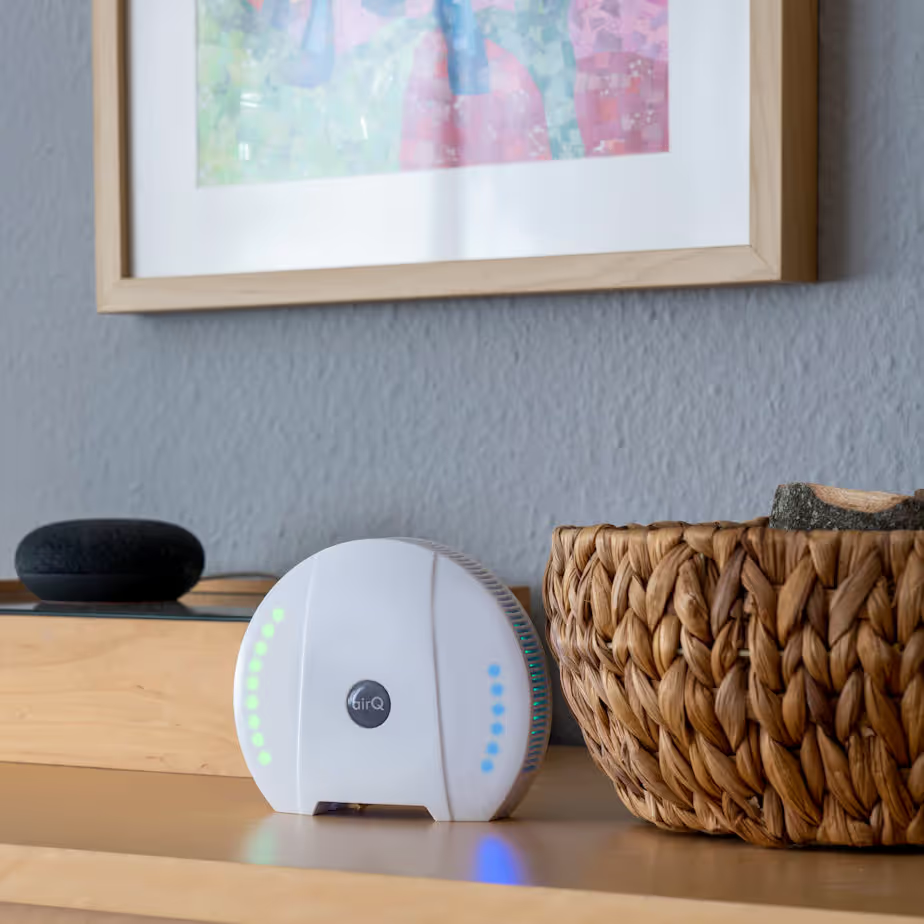
The air-Q supports numerous smart home standards (Homematic, openHAB, FHEM, Homey, IFTTT). You can even interact with the air-Q via the Alexa and Google Home voice assistants. Thanks to its wide range of sensors, it serves as a reliable source for controlling ventilation systems, air filters, windows, and thermostats, among other things, and can even detect when people are in the room.
The air-Q Air Analyzer in Real-World Use in a Smart Home
We conducted a live test of the air-Q under our own supervision. The test covers numerous features and answers questions about our smart air quality monitor. We tested the app and the smart home features. This demonstrates how the air-Q can function as a smart smoke detector.
Certified Quality

The WELL standard is an international rating system for building certification, developed and regulated by the Well Building Institute (IWBI) in the United States. It is the first standard of its kind to focus exclusively on the health and well-being of people inside buildings. Air-Q meets the high standards set by WELL for air quality measurement and is certified bythe IWBI.
Also known for