
¿Puede el air-Q medir el moho? ¿Cómo ayuda a prevenirlo?
Mold releases spores into the air, which, depending on the type of mold, can be detected as fine particles. However, the amounts released are very small. Since there is usually a background level of fine particles, the variations caused by mold spores are, unfortunately, barely distinguishable. For this reason, it is not possible to say with certainty that a room is free of mold.
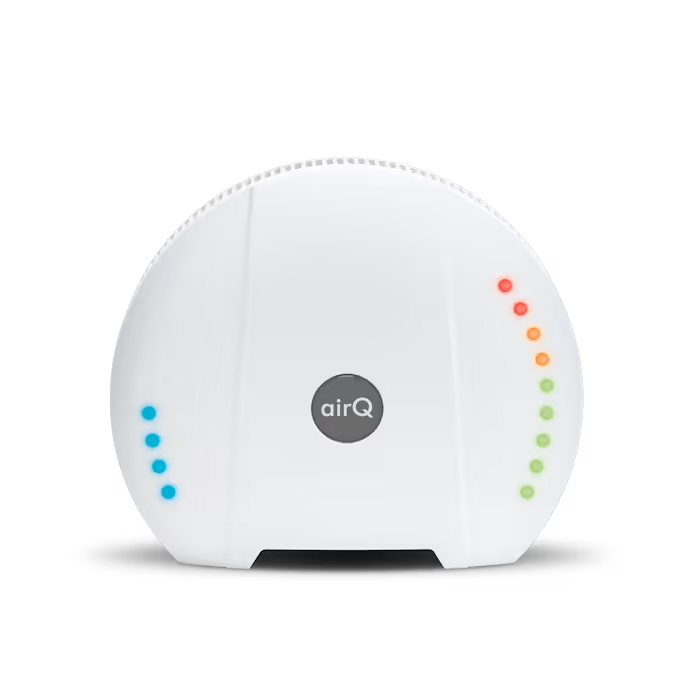
However, the risk of mold can also be assessed indirectly by observing various measured values. The air-Q indoor air monitor detects a tendency toward mold growth, for example, by tracking changes in absolute humidity, relative humidity, volatile organic compounds (VOCs), and fine particles in real time. These values can be correlated to assess an existing risk of mold. If these values are higher than normal, or even increase continuously over a period of time, the source of this increase must be identified; it may already be a mold infestation or indicate favorable growing conditions for mold.
To legally determine an existing mold load, a laboratory analysis remains essential.
With its mold index, the air-Q provides a good starting point for monitoring mold risk over time.