
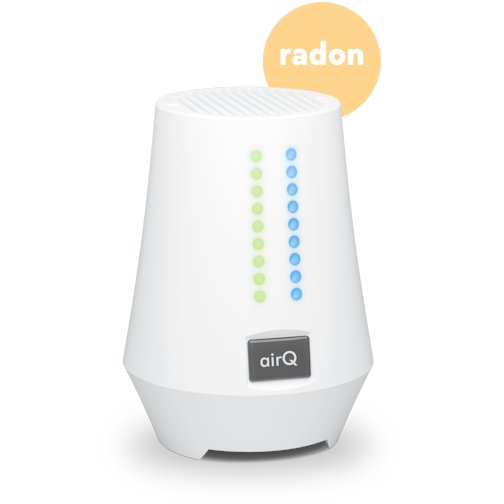
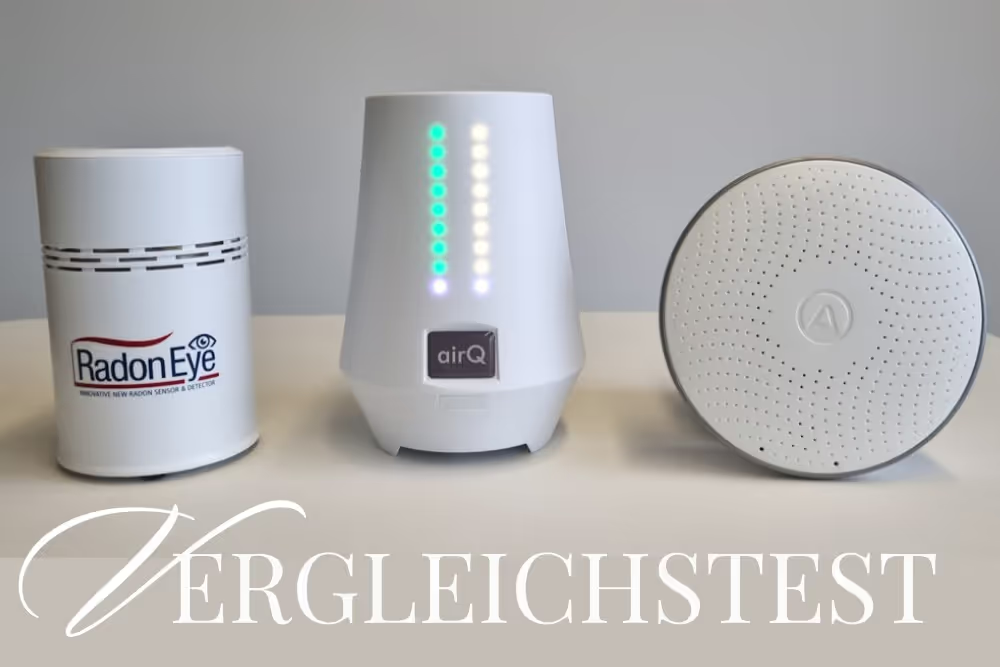
Radon Detector Test: Comparison of RadonEye, air-Q radon science, and Airthings Wave Plus (from left to right)
Invisible but dangerous: radioactive radon gas can accumulate unnoticed indoors. A radon detector is needed to detect it. With the air-Q, we offer a highly advanced measuring device of our own. We’ve tested how well the air-Q radon science performs compared to the RadonEye and the Airthings Wave Plus. Note: We’ve compared all features as objectively as possible and present the most important characteristics of the three detectors in a direct comparison here. We hope our product review helps you get a comprehensive overview.
What is radon, and how is it formed?
Radon is an invisible, odorless radioactive gas produced by the decay of uranium in the soil, which rises to the surface. It can enter homes through small cracks or fissures in the foundation. Due to its physical properties, it often accumulates in basements or on the ground floor. However, it can also spread to upper floors through cracks and air ducts (for example, vents or heating pipes).
Where does it appear most often?
Radon can occur anywhere, but it is most prevalent in regions with uranium-rich subsoil. In Germany, parts of Saxony, Thuringia, Bavaria, and Baden-Württemberg are particularly affected. In other countries as well, there are high-risk areas near mountain ranges, such as parts of the Alps, the Rocky Mountains, or regions rich in granite. Outdoors, there is generally no danger from radon, as the wind quickly disperses and dilutes it.
The Danger of Radon
The WHO classifies radon as the second leading cause of lung cancer (only smoking is worse). This underscores the importance of monitoring this health risk. In our radon detector test, we compared three devices: air-Q radon, Airthings Wave Plus, and RadonEye. These devices allow you to check radon levels in your home or workplace and track them over time to identify potential sources of radon and take action.
1. Comparison of Sensor Equipment
Our three radon monitors are equipped with different sensors. Depending on the model, the devices provide, in addition to the radon level, other sensors for measuring various air parameters. We have summarized the values measured by the devices in the table below.
RadonEye — Sensor: cámara de ionización pulsada; intervalos de medición: 10 min; resolución: 0,1 Bq/m³; sensibilidad: 100 Bq/m³; rango de funcionamiento: 10 °C – 40 °C, humedad < 90 %; rango de medición: 1 – 3.700 Bq/m³; desviación de medición: < ±10 % (alcanzada tras 1 h). Sensores: solo radón (Rn).
Airthings Wave Plus — Sensor: cámara de difusión pasiva; intervalos de medición: radón 1 h, otros valores 5 min; resolución: 0,1 Bq/m³; rango de funcionamiento: 4 °C – 40 °C, humedad < 85 %; rango de medición: 1 – 20.000 Bq/m³; desviación de medición: tras 7 días ~ 10 %, tras 2 meses ~ 5 %. Sensores: radón, CO₂, COV, temperatura y humedad relativa.
air-Q radon science — Sensor: conteo continuo de pulsos; intervalos de medición: evaluación matemática mediante filtro de Kalman cada 2 segundos; resolución: 0,1 Bq/m³; sensibilidad: 50 Bq/m³; rango de funcionamiento: 0 °C – 50 °C, humedad < 95 %; rango de medición: 0 – 1.000.000 Bq/m³; desviación de medición: < ±10 % (alcanzada tras 1 h). Sensores: radón, CO₂, COV, temperatura, humedad relativa y absoluta, presión atmosférica, punto de rocío, partículas finas (PM₁, PM₂,₅, PM₄, PM₁₀) y tamaño de partícula de partículas finas.
2. Connection Options and Device Management
When buying a radon detector, design and ease of use are just as important as accuracy. That's why we've compared the connection options and visual features.
RadonEye
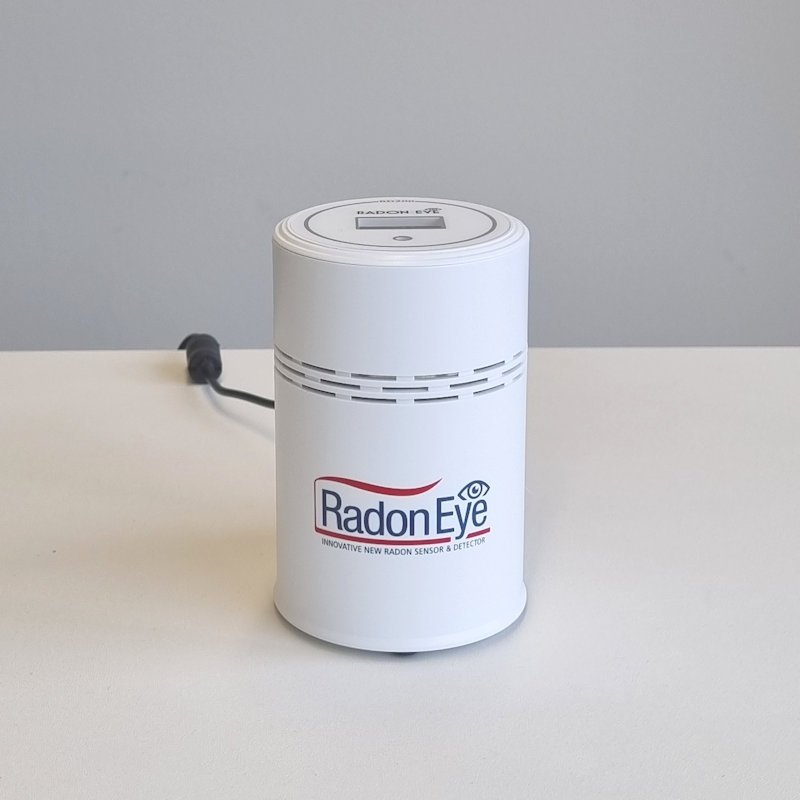
The RadonEye's display is worth noting, as it allows you to read the measured values without the smartphone app. However, the screen is very small, so you have to stand right in front of the device. The data is stored for one year at one-hour intervals. The device uses a proprietary power supply and can only operate with the included adapter and plug.
Plastic packaging · Stable stand · Built-in radon data display · Connection status indicator.
Airthings Wave Plus
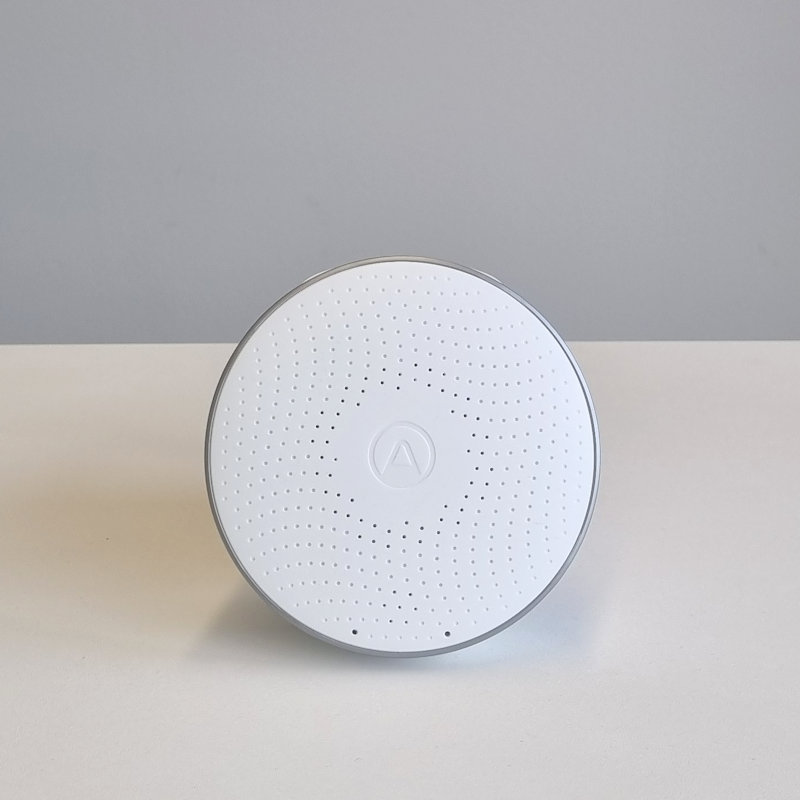
The Airthings Wave Plus is battery-powered and can be mounted on the wall. It also features a color LED indicator that can be activated with a hand gesture, which shows the air quality (green, yellow, red). To activate the gesture, you must move your hand directly over the device.
Packaging with a small plastic tab · for wall mounting · color-coded indicator (manual activation) · intuitive color indicator: green (good), orange (fair), red (poor).
air-Q radon science
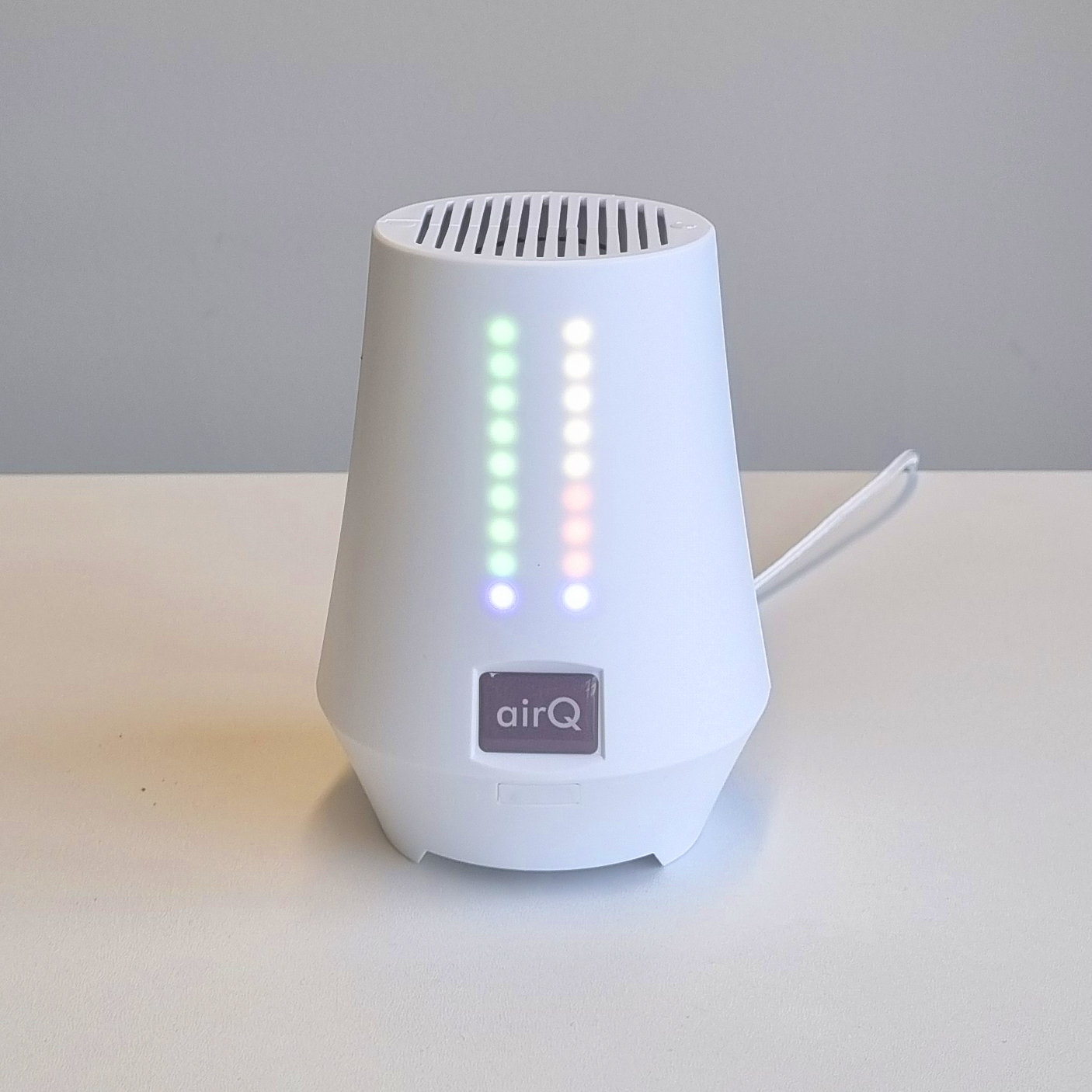
The air-Q radon science features a high-resolution LED display that can be freely configured. The values measured by the various sensors can also be read from a distance. The device is powered via a USB-C port, so standard power adapters available on the market can be used. The air-Q radon science also has a removable SD card that stores the measured data in CSV format. The memory is sufficient for more than 10 years of data at a 2-minute interval. In addition, the USB port on the air-Q radon science is active, meaning the device can be connected directly to a computer. This feature is present at the hardware level but will be enabled at a later date via a firmware update.
Plastic-free packaging · Permanently visible LEDs · 1 measured value per side of the LED display · Intuitive color indicator: blue (good), orange (average), red (poor).
3. Startup and Network Configuration
RadonEye: After a brief self-test, the RadonEye is ready to use immediately after being turned on; that is, it displays radon readings on its own screen that should reach the specified accuracy within an hour. The RadonEye can connect to the EcoSense app via Bluetooth. Setup takes about two minutes, during which you must manually enter the device code. Afterward, the measured data can always be viewed when your smartphone is near the device. It is not possible to view the measured data via the internet.
Airthings Wave Plus: Setup is quick and requires no manual input. After inserting the batteries, the device is detected via Bluetooth and appears in the app. Exactly one Airthings device can be linked to a user account. You can assign a name and location to it. The process takes about 3–4 minutes. However, reliable measurement data is only available after several days. Measurement data can be viewed when the smartphone is near the device. It is possible to view the measurement data online, but it must first be uploaded via the smartphone after manually connecting to the Airthings device via Bluetooth. The Airthings Wave Plus cannot send data to the internet on its own if the user or smartphone is not connected via Bluetooth—a manual process.
air-Q radon science: The air-Q radon science starts up in 30 seconds after connecting the power supply. Once it has started up, it creates a Wi-Fi network to which a PC or smartphone/tablet can connect. Using the air-Q app or a PC, you can then configure the Wi-Fi settings, the device name, the location, and a device password. Setup takes between 2 and 4 minutes and is slightly more prone to errors than a Bluetooth setup, as there are more potential sources of error (e.g., typos in the Wi-Fi password, repeaters, blocked ports, etc.). The air-Q can be integrated into multiple user accounts. This is important because each user can use their own settings (for example, push alerts). An internet connection is not required. The air-Q can also operate solely on the local network or even without one—that is, in standalone mode. If the air-Q is connected to Wi-Fi and you wish to use the free air-Q Cloud, the data can be accessed from anywhere, as the air-Q automatically transmits the data to the air-Q Cloud every two minutes.
4. Charts, Data, and Measurement Results — RadonEye
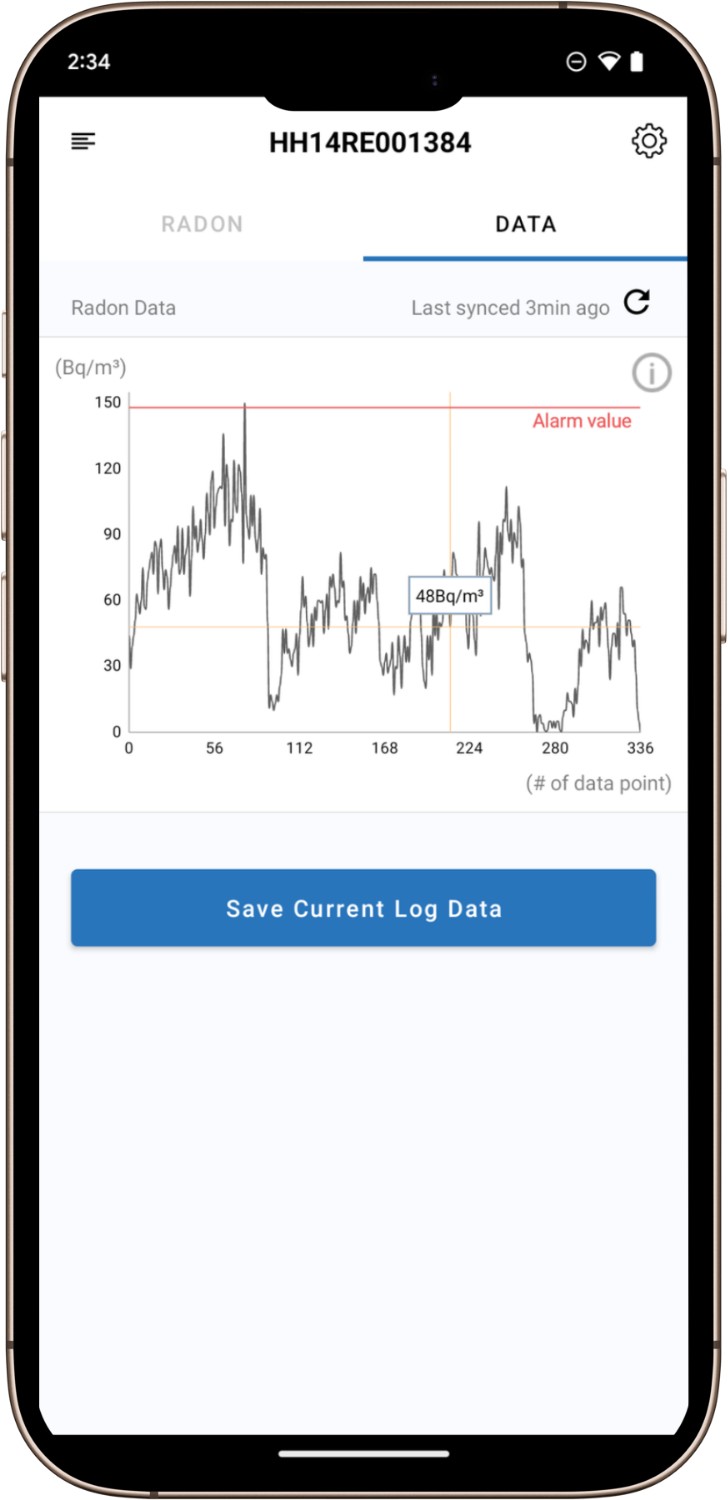
RadonEye displays current measurements every minute and offers basic graphing features, such as the ability to view individual readings as well as average, maximum, and minimum values. However, it lacks time and date displays, and the graphing options are very limited. For example, you cannot select a specific time period. It is unclear which time period is actually being displayed. Data can only be exported as a simple text file without timestamps.
The RadonEye focuses on its primary function as a measuring device and does not include built-in advice or additional assistance. It offers pure measurement functionality, without any additional guidance or support.
Airthings Wave Plus — Different Time Periods
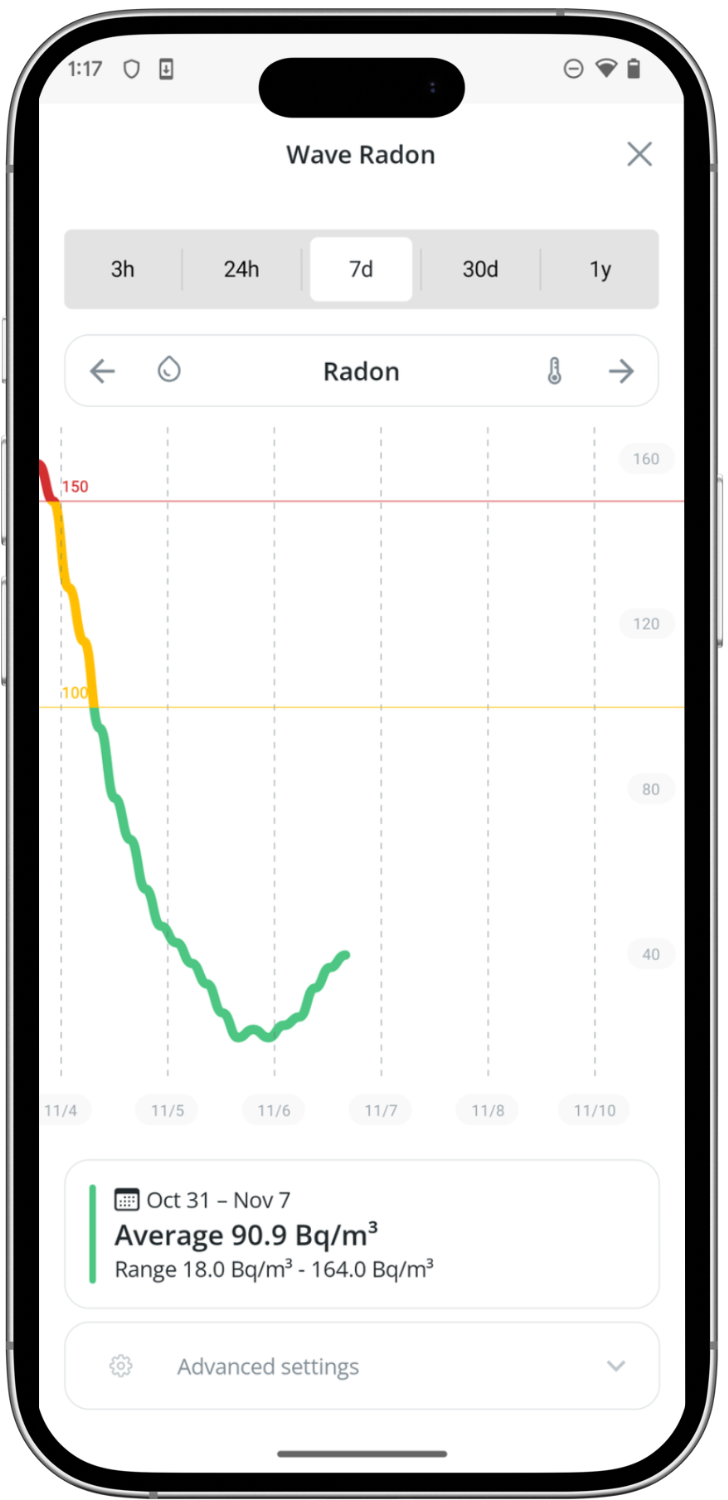
The Airthings Wave Plus provides real-time measurement data within a few minutes. The device displays data in the form of graphs for periods of three hours, one day, seven days, 30 days, and one year; custom periods—such as a specific day in the past—cannot be configured. However, only one value can be displayed on the graph at a time. In addition, both current and average values can be displayed.
The Airthings app offers structured guidance. The tips are divided into time-based phases, with users receiving support immediately after installation, as well as at 7 and 30 days. In addition, users have access to a comprehensive help center for additional information and assistance.
air-Q radon science — detailed analyses
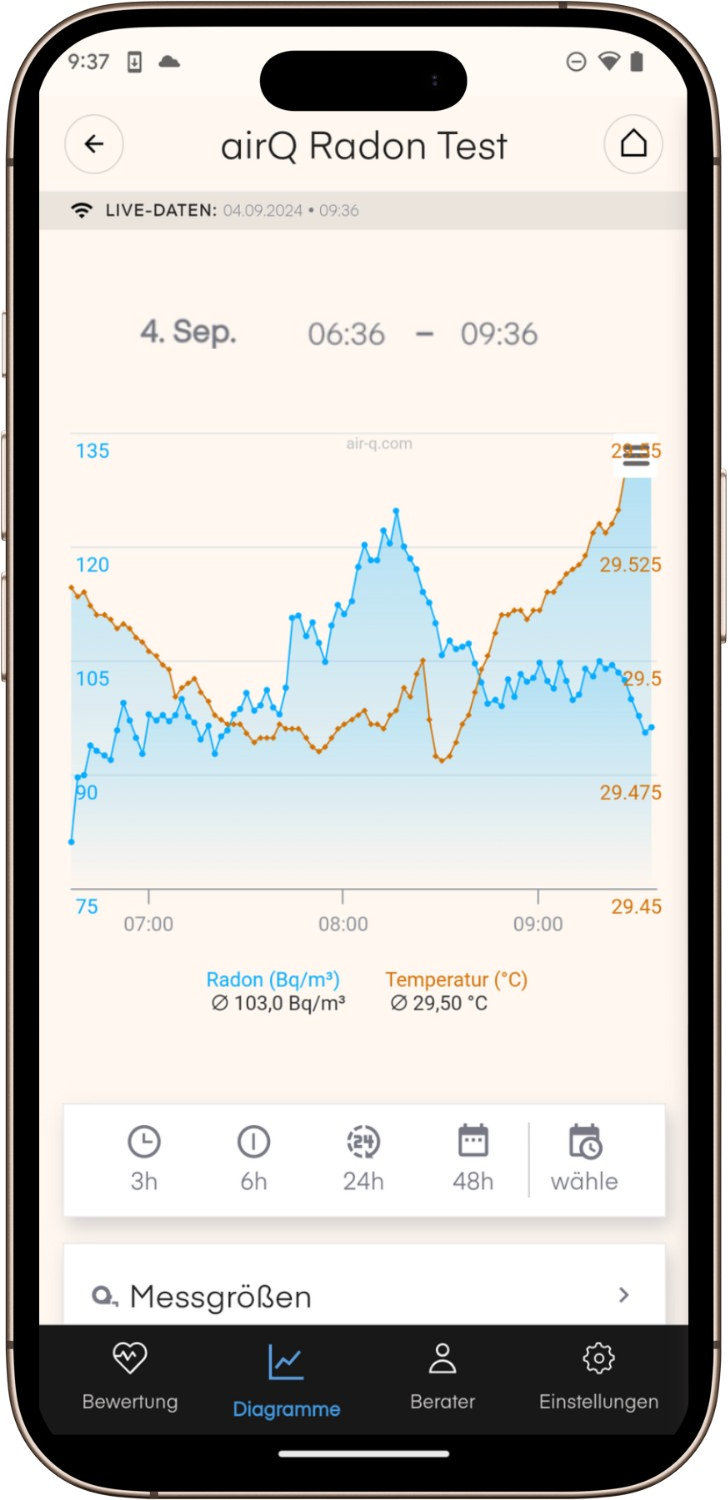
The air-Q radon offers a wide range of analysis options. Current measured values are provided by the second—that is, truly in real time. Users can use a quick selector or configure time periods for analyzing historical data with complete flexibility. There is no time limit: in theory, the air-Q offers storage space for more than 10 years of data with a resolution of two minutes. The display allows you to compare up to two values simultaneously, whether they are from two sensors on the same air-Q device or from two identical sensors on two different devices (via the Web App). Limit values and custom thresholds can be displayed optionally. For more detailed analysis, numerous export options are available, including image formats, CSV, and Excel (Web App).
The air-Q app provides comprehensive information about the measured parameters and data, and explains the causes and potential health effects. Particularly useful are the individualized solutions and personalized advice in the event of poor air quality. A new feature is an AI advisor that evaluates the measured values individually and in real time with the touch of a button.
Comparison of Measurement Results
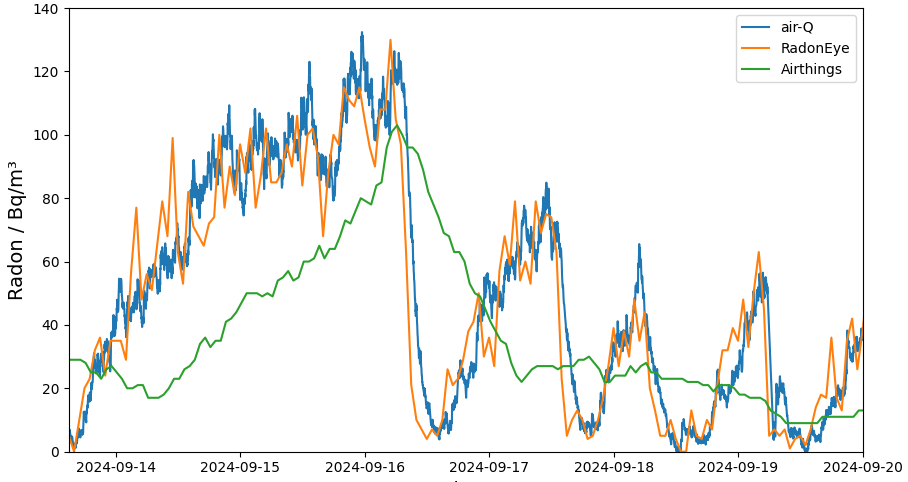
As part of our study, the three radon detectors were subjected to a comparative test over a one-week period. To enable a direct comparison of the measurement data, the data were plotted on a single graph.
While the RadonEye and the air-Q radon show a similar and very dynamic trend, the curve for the Airthings Wave Plus deviates considerably. In particular, the Airthings data show a clearly lower rate of change, while the other two devices reach their maximum values at approximately the same time. Even so, the typical patterns resulting from air exchange (ventilation) in the room are only visible on the Airthings Wave Plus with a significant time lag—or are not visible at all. This clearly reduced sensitivity can be attributed to the passive measurement method.
However, it should be noted that this assumption is only a hypothesis. In several independent tests that included additional devices, the Airthings meter consistently showed differing and significantly lower radon concentrations compared to the other measurement systems.
5. Configuration Options
Individual configuration options are key to ease of use and adaptability. They allow you to tailor the measuring device to your specific needs, from LED brightness and units of measurement to alarm thresholds. We have compared the three radon detectors.
RadonEye — Basic Configuration Options
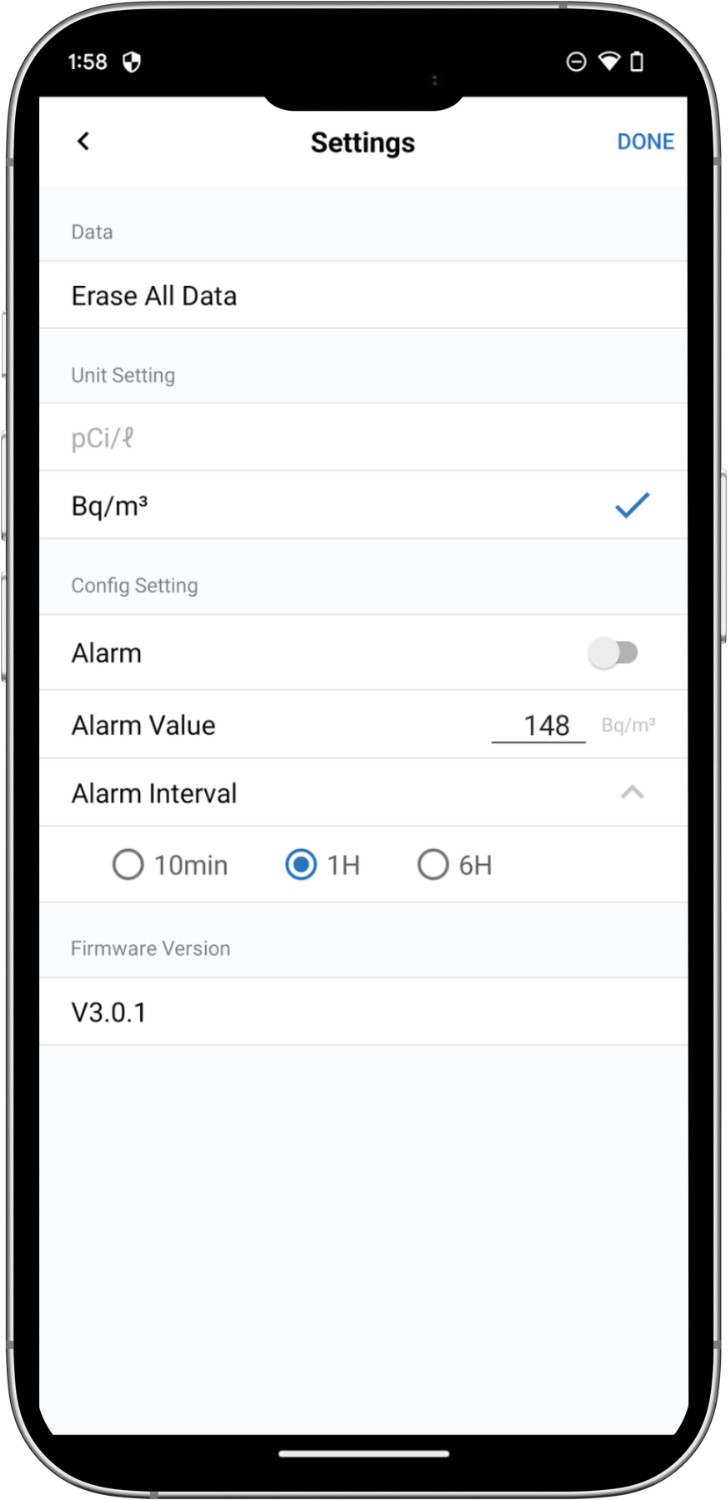
The RadonEye offers only a few settings, grouped into a single category: users can delete saved data, adjust the unit of measurement, and set an alarm threshold at which the device emits a beep.
Airthings Wave Plus — Basic Settings
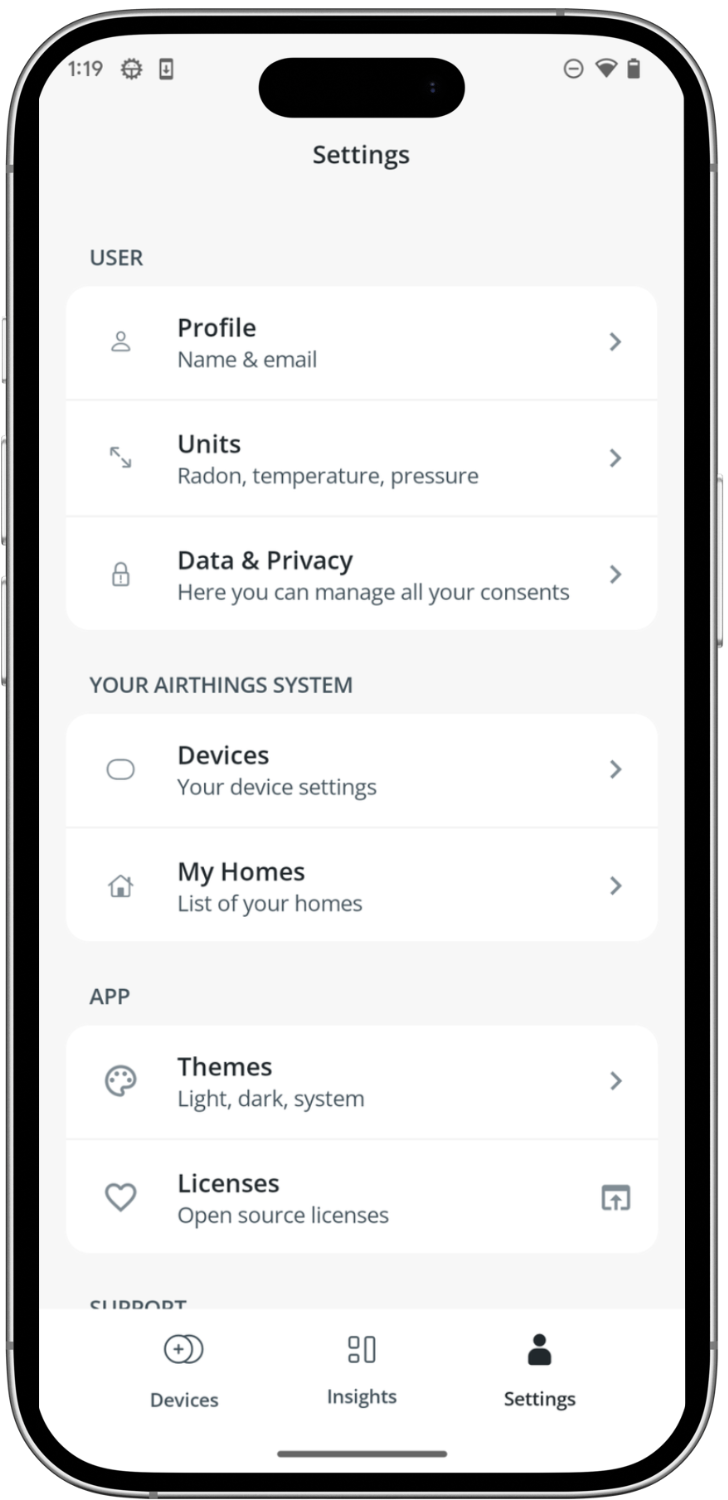
The Airthings device offers a bit more customization and is also designed to work with multiple devices. Thanks to the greater number of sensors it includes, there are also more configuration options. You can set units of measurement and various notifications, as well as enable dark mode. It also features a built-in help and support section.
air-Q radon science — customization and numerous additional features
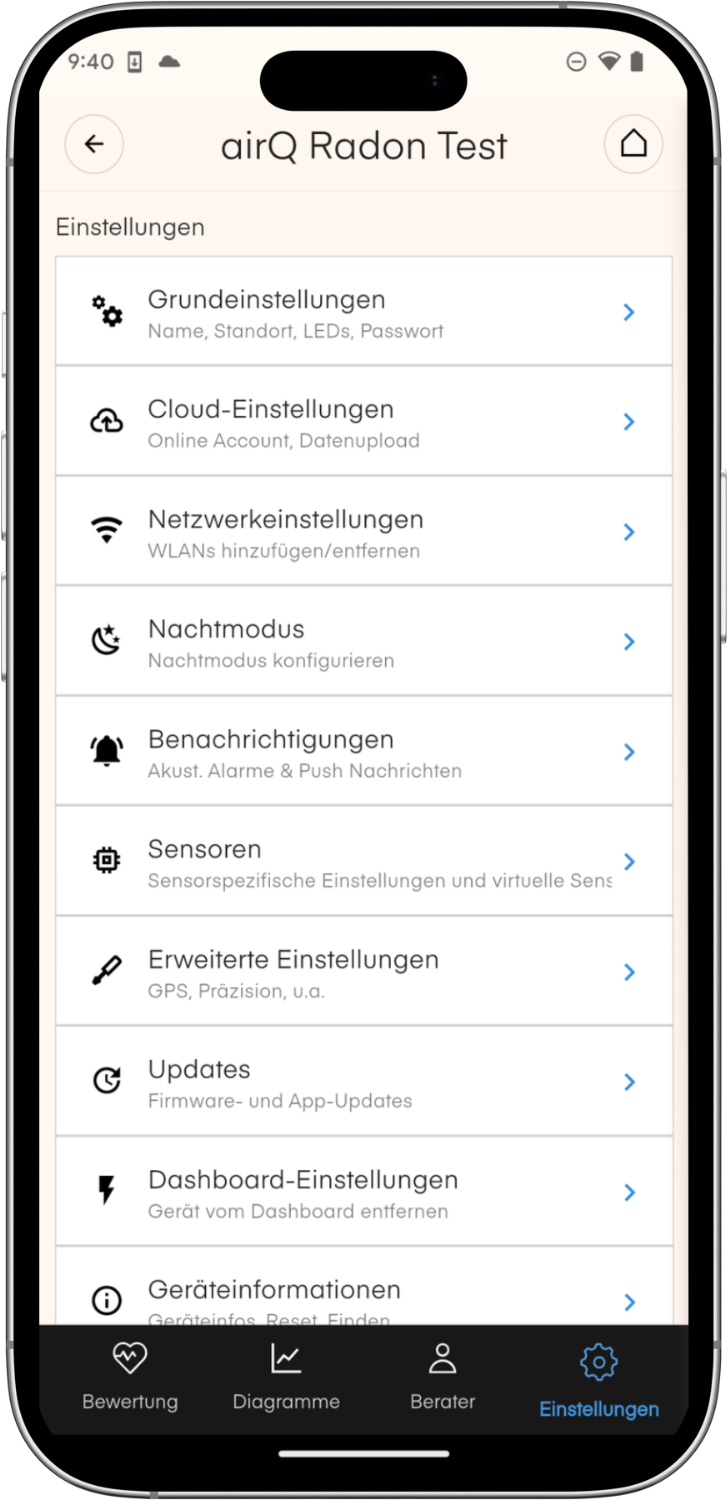
The air-Q radon offers numerous parameters and customization options across ten settings categories. These include options to customize the LED display with different themes, night mode, configurable cloud data storage, alarms and push notifications, calibration functions, and a dark mode, as well as other settings to personalize the app interface. In addition, there are numerous professional settings and device information.
6. Internationalization / Language Settings
However, not all three devices tested have the same international reach. The smartphone app and the user manual are sometimes available only in English. Due to the technical terminology used, ease of use and accessibility may be somewhat limited.
RadonEye: The RadonEye “EcoSense” app is available only in English. The user manual, however, is available in seven different languages.
Airthings Wave Plus: The Airthings app is also available only in English. However, the user manual is available in nine different languages.
air-Q radon science: The air-Q app is available in three languages: German, English, and French. The user manual is available in two languages: German and English. We have learned from a reliable source that a Spanish version is planned for the near future.
7. Alarm Features / Push Notifications
Among the most important functions of monitoring devices are alarms for critical situations. In particular, when it comes to radioactive radon, alarm functions are crucial for responding quickly to critical levels and staying healthy and safe.
RadonEye
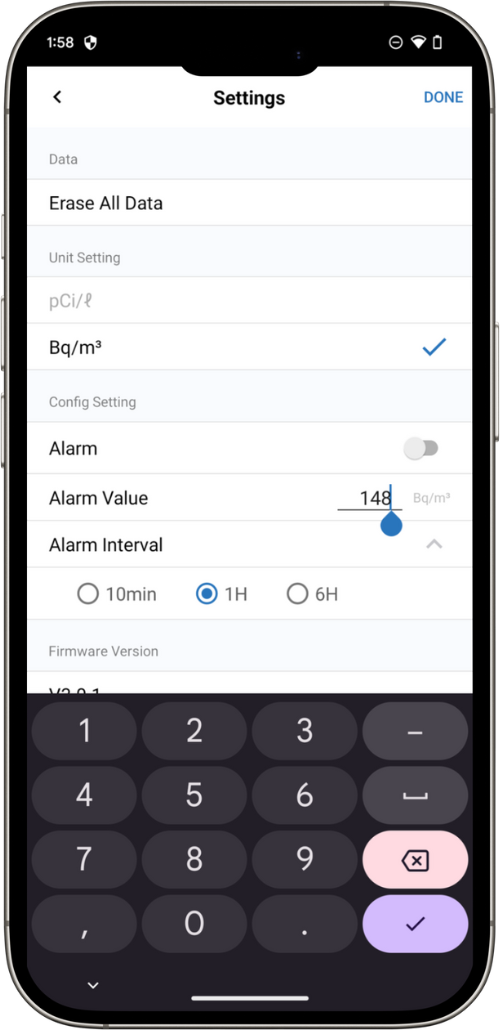
RadonEye offers email notifications and in-app alerts that notify users when set threshold levels are exceeded. However, these features are only available within Bluetooth range, which limits remote monitoring.
Airthings Wave Plus
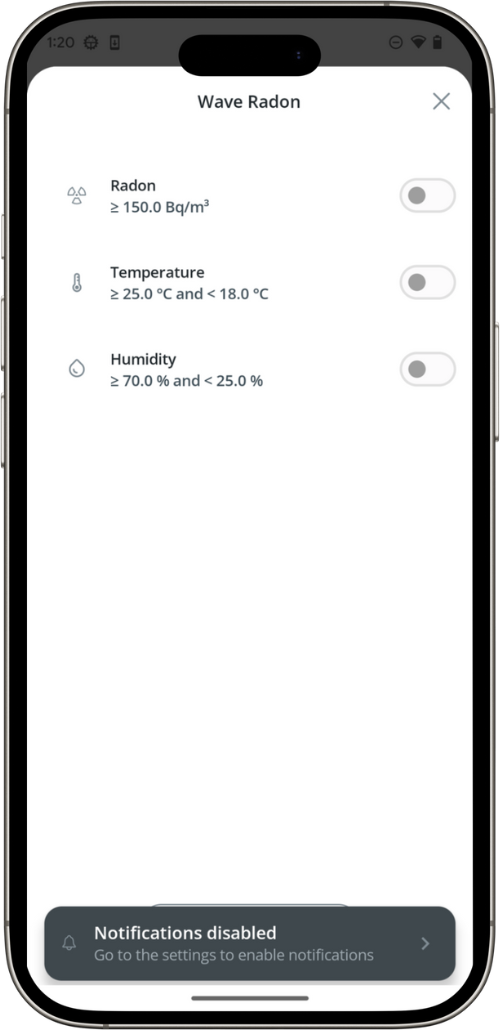
In the Airthings Wave Plus app, you can enable various preconfigured push notifications. The app sends push notifications for different air quality parameters. Users can individually configure which measured values and thresholds should trigger these notifications.
air-Q radon science
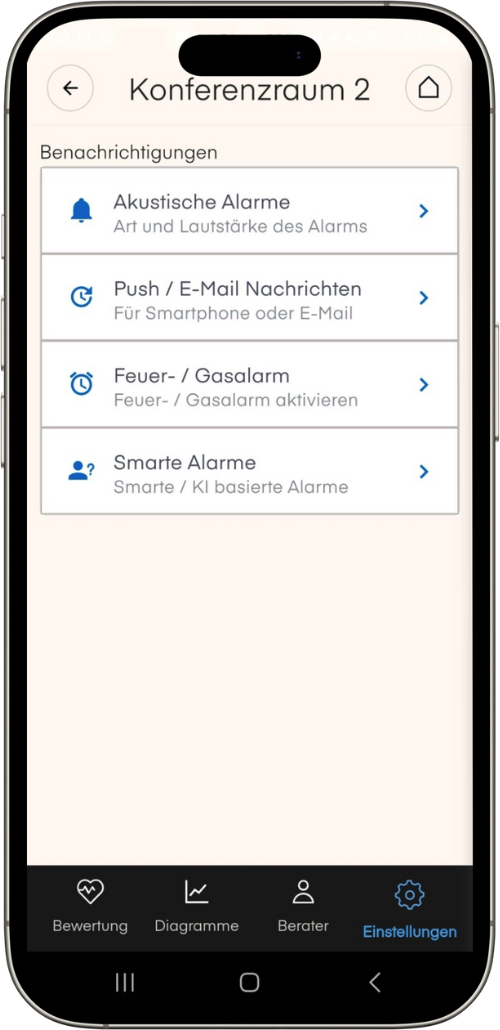
The air-Q radon offers several types of alerts: visual alerts via the configured LED, push notifications or email alerts for remote monitoring, gas and fire alarms, as well as AI-based alerts for the intelligent detection of various situations and changes in air quality.
8. Remote Monitoring
RadonEye allows access to measurement data only within Bluetooth range. Users can receive alerts, but only if they are nearby.
Airthings Wave Plus allows for remote monitoring, but requires an additional device—the SmartLink Hub—which is not included with the product. With this hub, users can view real-time data and receive notifications when threshold values are exceeded.
The air-Q radon offers full remote access. Users can view the device's data from anywhere and receive custom notifications. This allows for efficient monitoring of air quality even when you're not on site.
9. Conclusion: Which radon detector is right for you?
Each of the devices presented has its own strengths and is suitable for different needs:
RadonEye: A good solution for users who need a simple, one-time radon measurement. The device focuses on its core function without any additional features, making it especially easy to use for beginners. It simply has a display that shows the current reading. It works without a smartphone app, but it also doesn’t offer any kind of help.
Airthings: Recommended for users who value a customizable data display. In addition to measuring radon, the Airthings Wave Plus detects other important air quality parameters. Thanks to its well-designed app, the device offers more features than the RadonEye, although it cannot be used without the app.
air-Q radon science: The air-Q offers the most comprehensive analysis capabilities, along with numerous configuration and alarm options. It also features the widest range of additional sensors beyond radon. The built-in remote access allows for remote monitoring and control, ideal for smart-home enthusiasts or for people who want to monitor multiple locations and a wide range of air quality parameters. Even without the app, the air-Q radon science provides, thanks to its color scale, a reading in increments of 30 Bq/m³ up to approximately 500 Bq/m³. The app provides additional information, graphs, and threshold values, as well as a health advisor.
The Right air-Q for Your Radon Measurement
The air-Q radon and air-Q radon science continuously measure radon in real time and offer numerous additional sensors, comprehensive analyses, and remote access.
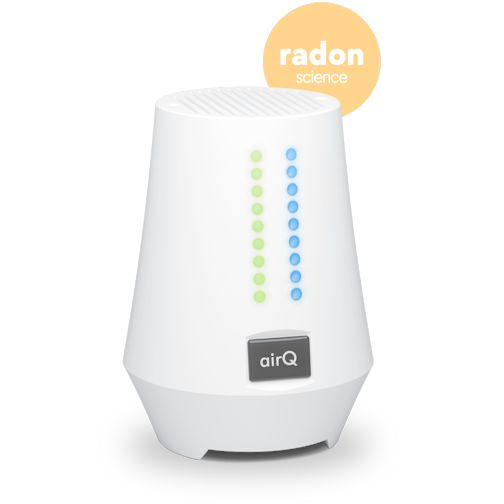
air-Q radon science - detecting the radioactive gas radon and measuring air quality
Optional sensors
Starting at 499 €