
Radon (Rn)
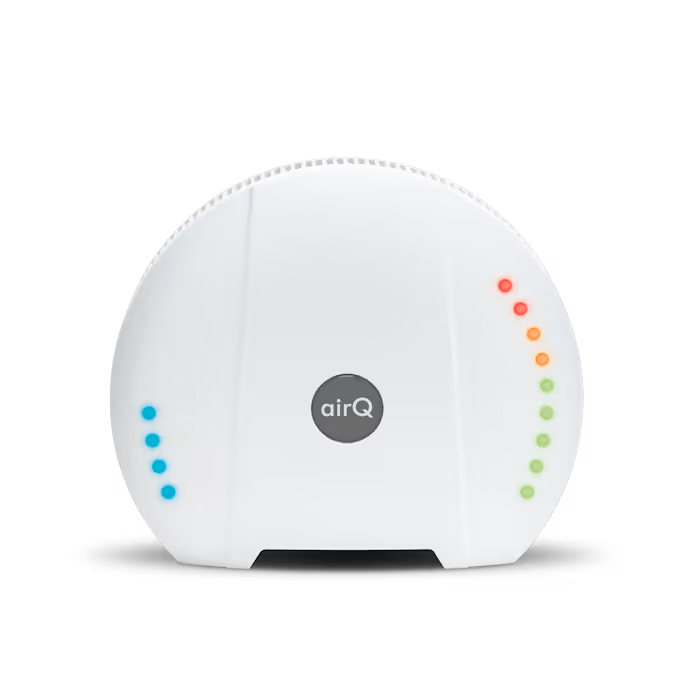
air-Q with a radon sensor
Description:
Radon (Rn) is a chemical element in the noble gas group and, at 9.73 mg/cm³, the heaviest of the elemental gases. It is chemically inert and, under normal conditions, is colorless, odorless, and tasteless.
All isotopes of this substance are radioactive. With an average effective dose per person (in Germany) of approximately 1.1 millisieverts per year (mSv/a), radon accounts for the largest proportion of radiation at the Earth’s surface. The most stable isotope is ²²²Rn, or radon-222, which decays into radium with a half-life of 3.8 days. This isotope, along with ²²⁰Rn (radon-220, also known as thoron) and ²¹⁹Rn (radon-219, also known as actinon), are naturally occurring isotopes present in the Earth’s atmosphere and can accumulate in poorly ventilated rooms.
Radon is used in medicine to boost the immune system. In addition, measuring radon levels provides information about groundwater quality. Radon measurements are also used in seismic forecasting and in the search for uranium ore deposits.
Radon limit values:
As of December 31, 2018, the reference values published by the EU as a directive and established in the German Radiation Protection Act are binding. Accordingly, in workplaces and living spaces, appropriate mitigation measures must be taken when the Rn concentration reaches 300 Bq/m³—that is, 300 decays per second per cubic meter of air. Due to regional differences in radon exposure, all federal states must determine, by 2020, whether they comply with this reference value.
The German Commission on Radiation Protection (SSK) goes even further in its assessments. It defines the normal range for the concentration of Rn in indoor air as 250 Bq/m³. Values between 250 Bq/m³ and 1000 Bq/m³ are considered to fall within the assessment range, where appropriate ventilation practices are sufficient to reduce radon levels. In the so-called remediation range—above 1,000 Bq/m³—more complex measures to protect against radon-related harm are warranted. The WHO and the German Commission on Radiation Protection (SSK) recommend maintaining the level below 100 Bq/m³ on a long-term basis.
| Denomination | Radon Limit Values |
| Euratom Standards at the EU Level | 300 Bq/m³ annual average |
| Estimated planning value for new buildings | 200 Bq/m³ annual average |
| WHO Recommendation | 100 Bq/m³ |
Consequences of an excessively high Rn concentration:
According to studies by the World Health Organization (WHO), radiation levels between 100 and 200 Bq/m³ can significantly increase the risk of lung cancer—by 10% for every 100 Bq/m³. Smokers are at particular risk, as the carcinogenic properties of radon and tobacco smoke reinforce each other. For this reason, the Federal Office for Radiation Protection recommends taking precautionary measures to reduce radon levels starting at a concentration of 100 Bq/m³.
With regard to drinking water, the German Commission on Radiation Protection (SSK) recommends a reference value of 100 Bq/liter, above which measures to reduce exposure should be considered.
Source of the Rn:
Radon is formed during the decay of uranium and thorium in rock or soil. Since it does not chemically bind to the surrounding rock, it rises through tiny cracks and fissures in the rock to the Earth’s surface, where it escapes into the atmosphere, groundwater, as well as caves, mines, basements, and pipes. In regions with high concentrations of uranium and thorium—in Germany, particularly in the Ore Mountains and the Bavarian Forest—elevated levels of radon (Rn) are also recorded. Above all, the accumulation of radon in basements, which are rarely ventilated, and its subsequent penetration into the ground floor poses an imperceptible health hazard.
In mines where uranium, lead, or fluorite are extracted, as well as in factories and laboratories that work with radium, thorium, and uranium, increased radon levels are also observed.
Sensor used:
The radon measurement module was developed in-house by air-Q. The measurement principle is based on the detection of alpha radiation and the analysis of the pulses generated by a scintillator inside a light-tight measurement chamber.
Radon Detector
A radon monitor is an essential tool for monitoring indoor radon levels and ensuring that your home remains a safe place. Long-term exposure to high radon levels can increase the risk of lung cancer, so monitoring radon levels in your home is of critical importance.
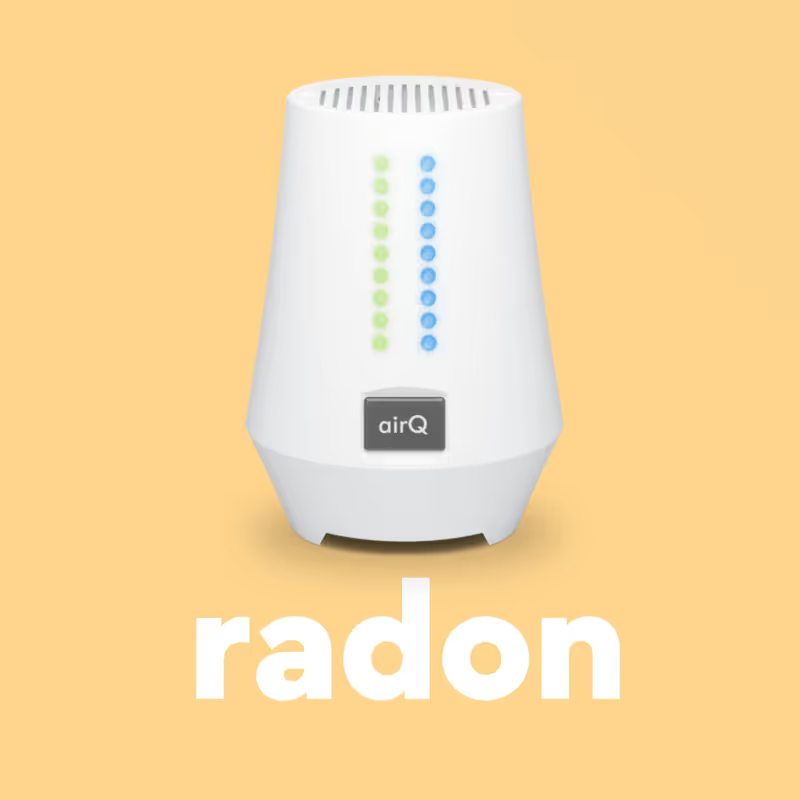
With a radon monitor like the air-Q Radon, you can monitor radon levels in real time and respond quickly to high readings. Our devices are available in two versions. They stand out for their high accuracy, ease of use, and reliability, and can be used with a free app.
Installing and using the radon monitor is easy. Simply place the device in the room you want to monitor and follow the additional instructions. The ability to analyze the data using a computer or smartphone allows for easy analysis and monitoring over extended periods.
By using a radon detector, you can take proactive steps to reduce radon exposure in your home—for example, by improving ventilation or sealing cracks in the foundation. This way, you protect not only your own health but also that of your family. Ensure a safe and healthy living environment.
Radon measurement:
Use the air-Q radon analyzer to monitor radon and other indoor air gases and pollutants in real time. The air-Q radon analyzer is available for purchase in the store.
More measured values / sensors