
Relative humidity (ρ)
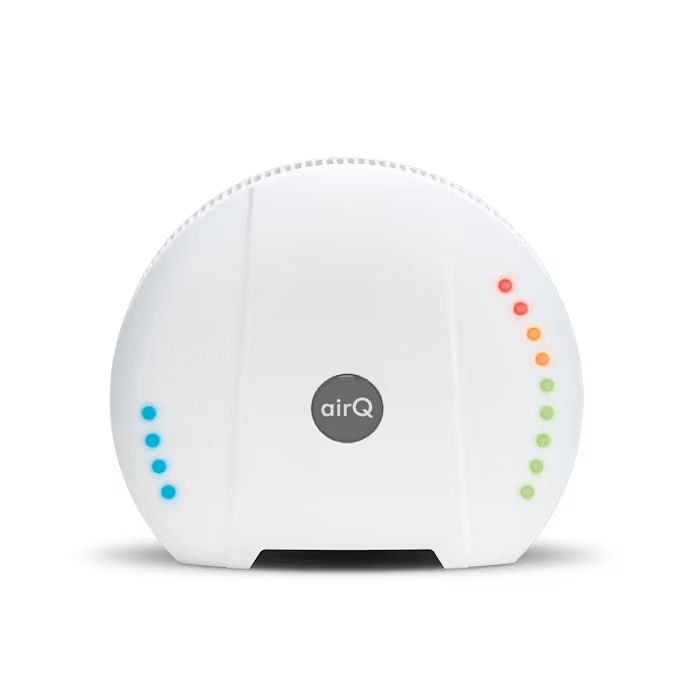
air-Q with a sensor for relative humidity
Definition
Air humidity describes the water vapor content in the air and is measured in absolute terms in g/m³ and in relative terms in %. Water vapor should not be confused with the wisps of steam rising from a pot of boiling water, even though the name might suggest otherwise. Water vapor is water in its gaseous state and, like any other component of the air, is therefore invisible.
Relative humidity describes the relationship between absolute humidity and the maximum humidity of the air. It therefore describes the proportion of water vapor actually contained in the air relative to the maximum possible water vapor content, expressed as a percentage.
In general, a distinction is made between absolute, relative, and maximum air humidity. Absolute air humidity is defined as the mass of water vapor contained in a given volume of air. Maximum air humidity refers to the highest possible absolute humidity at a given temperature.
The lower the air temperature, the less water vapor it can hold. As the air cools, the maximum humidity level may be exceeded if the previously warmer air already had a high relative humidity. This causes water to condense on the walls, floor, and ceiling.
Limit values for relative humidity:
No legal limit values have been established for either workspaces or living spaces. In enclosed spaces, a relative humidity of between 40% and 60% is recommended. A range of 30% to 70% relative humidity is considered acceptable. If the relative humidity exceeds 95% or falls below 23%, most people perceive the air as uncomfortable.
The threshold for mold growth in rooms is exceeded when the relative humidity reaches 60 percent. There is one exception to this rule: when the exterior walls are significantly colder than the indoor air, which occurs especially during the colder half of the year.
| Denomination | Relative Humidity Threshold Values |
| General recommendation: minimum value | 40 % |
| General recommendation: maximum value | 60 % |
Consequences of air humidity that is too high or too low:
If the humidity in a room is too low, respiratory function is impaired. In addition, dryness can cause skin irritation and inflammation. The mucous membranes can also become dry, which significantly increases the risk of colds and flu. In extreme cases, this can lead to frequent nosebleeds.
When relative humidity is too high, perspiration—which helps regulate body temperature—is hindered, affecting well-being and, consequently, performance. In addition, circulation is strained in rooms that feel stifling.
Added to this is the risk of mold growth in indoor spaces caused by high humidity. Most mold species thrive at a relative humidity of 80% and a temperature of 20 °C, although some species can grow even at lower humidity levels. Mold spores and VOCs can cause not only allergies but also other health issues when inhaled. These include migraines, asthma, coughs and colds, conjunctivitis, as well as skin conditions, joint pain, and gastrointestinal discomfort.
When relative humidity exceeds 60%, there is also an increased proliferation of house dust mites. As their population grows, these mites release more allergens, which is particularly problematic for people with allergies.
Source:
Water vapor is formed by the evaporation of individual water molecules, which are released from the surface of the water by thermal energy and enter the air. This process depends largely on the temperature of the water and the air. Other important factors include the size of the water's surface and the degree of air saturation.
Indoors, humidity is generated by the breathing and perspiration of people and animals in the room. Cooking, showering, or bathing, as well as drying clothes, also contribute to increased humidity. In addition, water can seep in through windows, roofs, and walls that are not properly sealed, subsequently evaporating as water vapor. Proper insulation, frequent ventilation, and vigorous heating reduce the relative humidity in a room.
High humidity over extended periods is a clear indication of water damage to heating or drinking water pipes inside partition walls.
Sensor used:
Relative humidity is measured in the air-Q using a highly precise sensor. The temperature inside the air-Q differs from the outside temperature due to its self-heating. This self-heating also affects the relative humidity measured inside the housing and is corrected using mathematical formulas to account for conditions outside the housing. Even so, the air-Q reacts slightly more slowly to changes in air humidity than a sensor that is exposed to the open air.
Measuring relative humidity:
The air-Q air analyzer can also use one of its sensors to measure and analyze relative humidity and other pollutants. Here you can find a wealth of information about the air-Q. You can order the air quality monitor from the online store.
More measured values / sensors