

air-Q pro - The professional choice for ambitious users
- Carbon dioxide
- Volatile Organic Compounds
- Relative humidity
- Air temperature
- Noise
- Fine Particles
- Carbon monoxide
- Nitrogen dioxide
- Atmospheric pressure
- Formaldehyde
- Ozono
BREEAM (Building Research Establishment Environmental Assessment Method) is a British certification system for evaluating the sustainability of buildings, introduced in 1990. It takes into account environmental, social, and economic factors and evaluates criteria such as energy efficiency, water consumption, building materials, environmental pollution, and management. BREEAM is internationally recognized and helps make buildings more sustainable. Request a quote now

Precise Monitoring for a Healthy Environment
BREEAM is flexible and adapts to the specific requirements of each country. In German-speaking countries, TÜV SÜD offers certification and is the exclusive partner of BRE Global. Since 2016, TÜV SÜD Industrie Service GmbH has been the exclusive licensed partner of BRE Global for BREEAM certifications in Germany, Austria, and Switzerland.
1. Define the certification objective
2. Choose the grading system
3. Form the project team
4. Conduct the evaluation
5. Project Certification
→ More details about BREEAM
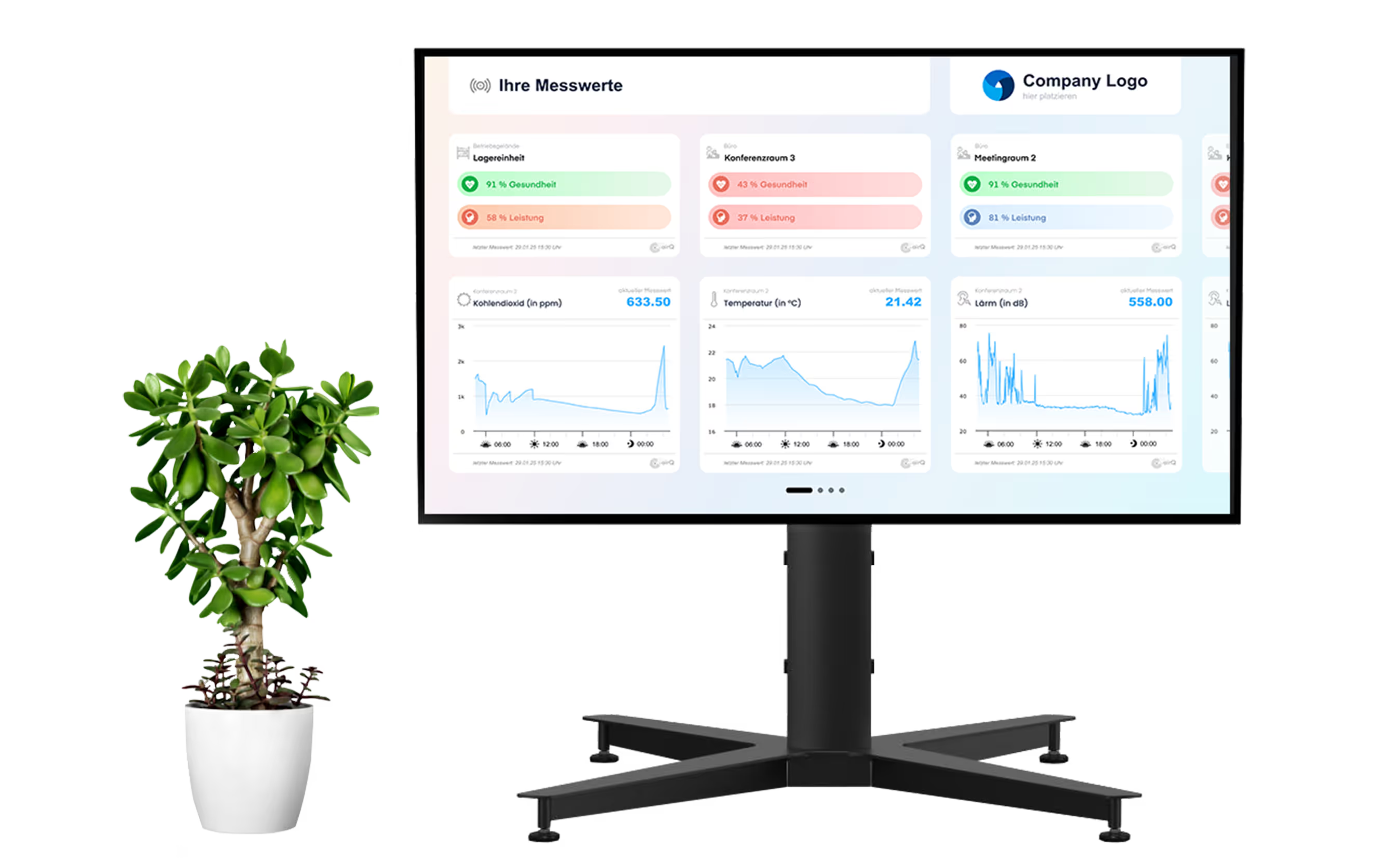
BREEAM reduces environmental impact, improves occupants’ quality of life, and increases property value. A key element of the certification is promoting the health and well-being of occupants. In this regard, indoor air quality plays a central role. Good indoor air quality in a building not only promotes the health of occupants but also contributes to achieving higher BREEAM ratings. Systems such as air-Q enable precise monitoring and optimization of air quality, thereby helping to improve comfort within the building.
The air-Q pro monitors all relevant air quality parameters using up to 14 sensors and triggers all alarms.