
Carbon monoxide (CO)
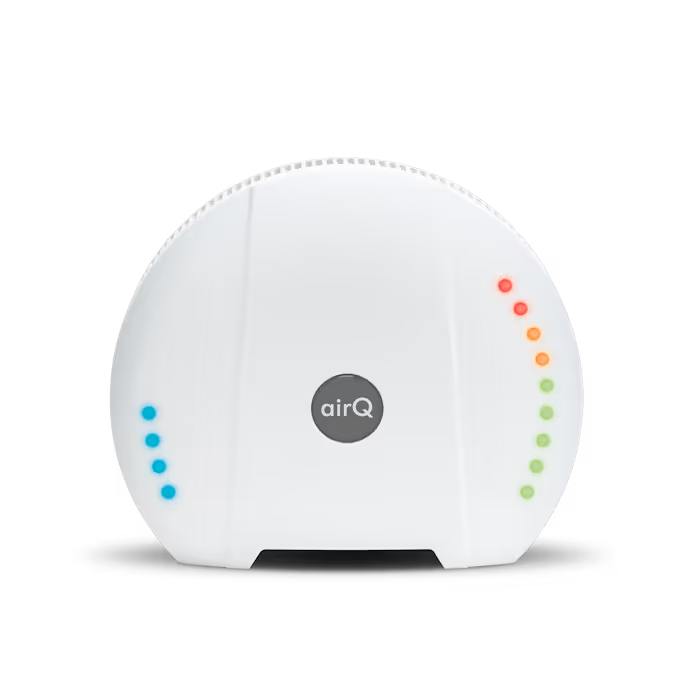
air-Q with a carbon monoxide sensor




Description:
Carbon monoxide (CO) is a simple inorganic compound of carbon and oxygen. It is a colorless, odorless, and tasteless gas. When exposed to oxygen, it burns with a clear blue flame, forming carbon dioxide. This gas is a dangerous respiratory poison. If it enters the bloodstream—for example, through smoking—carbon monoxide binds to hemoglobin in the blood about 210 times more strongly than oxygen. This can permanently impair oxygen transport and lead to fatal carbon monoxide poisoning. A concentration of just 1.28% carbon monoxide in the ambient air causes death within one to two minutes. Carbon monoxide is slightly lighter than air and tends to rise, although due to air turbulence, it is distributed throughout the entire room.
In industry, pure carbon monoxide is used in the production of formic acid and sodium formate. It is also used to convert chlorine into phosgene and methanol into acetic acid. It also acts as a reducing agent for iron ores.
Carbon monoxide limit values:
The normal concentration of CO in the air is approximately 0.6 to 6 mg/m³. In unventilated rooms with gas burners, fireplaces, or cigarette smoke, levels can easily reach 30 mg/m³.
According to the Federal Environment Agency, the maximum 8-hour average concentration should not exceed approximately 10 mg/m³. The maximum workplace concentration (MAK value) for carbon monoxide is set at 35 mg/m³. The WHO recommends concentrations of up to 25 mg/m³ for a maximum of one hour, and up to 85 mg/m³ for a maximum of 15 minutes. These values do not apply to pregnant women or people with pre-existing medical conditions.
| Denomination | Carbon Monoxide Limit Values |
| 24-hour guidance value from the Federal Environment Agency | 4 mg/m³ (3.2 ppm) |
| 8-hour guideline value from the Federal Environment Agency | 10 mg/m³ (8 ppm) |
| WHO recommendation: 1-hour value | 25 mg/m³ (20 ppm) |
| Valor MAK | 35 mg/m³ (28 ppm) |
| 15-minute indicative value from the Federal Environment Agency | 100 mg/m³ (80 ppm) |
| WHO recommendation: 15-minute value | 85 mg/m³ (68 ppm) |
Consequences of an excessively high CO concentration:
Eight hours of continuous exposure to a CO concentration of less than 60 mg/m³ is hardly dangerous for a healthy adult. However, people who are ill or have pre-existing conditions may experience health effects even at low levels. For example, hearing loss can worsen by up to 50% due to carbon monoxide.
Even with relatively low exposure to carbon monoxide—between 80 and 120 mg/m³—over several hours, the first physical symptoms may appear. These mainly include cold-like symptoms, such as a runny nose, headache, difficulty breathing, and irritated eyes.
If the CO concentration rises to levels between 170 and 350 mg/m³, fatigue, dizziness, and nausea set in after two to three hours. At concentrations of 460 mg/m³ or higher, exposure is considered extreme and poses an immediate threat to life. There is a risk of loss of consciousness and permanent brain damage. Within three hours at the latest, this concentration can cause death. At even higher levels, death occurs even sooner. After carbon monoxide poisoning, simply breathing fresh air is not enough. The body’s recovery and the restoration of oxygen levels in the blood can only be achieved by administering a disproportionately high amount of oxygen.
Source of CO:
Indoors, carbon monoxide typically enters the air through ventilation; the main source in urban areas is vehicle traffic. As a result, concentrations can exceed 5 mg/m³, depending on proximity to traffic. But leaky or malfunctioning fireplaces and stoves, gas stoves, and propane heaters also emit CO and increase its concentration. In addition, burning wood, wood pellets, or charcoal causes carbon monoxide levels to rise. If a room is not properly ventilated, CO poisoning can occur. For more information on this topic, see the linked blog post.
Sensor used:
Carbon monoxide is measured using an electrochemical sensor. CO molecules that “bind” to the sensor’s surface cause a small current to flow in the sensor. The advantage of our sensor is the individual sensitivity calibration performed by the manufacturer and its exceptionally long service life. The disadvantage of electrochemical CO sensors is their slight cross-sensitivity.
The sensor we use exhibits slight cross-sensitivity to hydrogen (H2). Therefore, it reacts somewhat to this gas and shows a deviation even when no CO is present.
Carbon monoxide measurement:
The air-Q air quality monitor and carbon monoxide detector is a particularly powerful and comprehensive measuring device. Here you can find a wealth of information about the air-Q’s technology. You can order the air-Q from the online store.
More measured values / sensors