
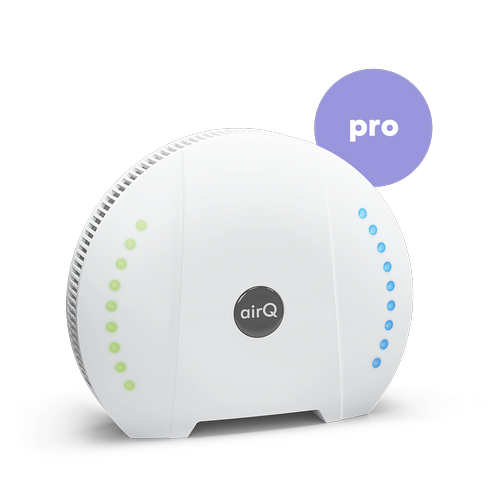
air-Q pro - The professional choice for ambitious users
- Carbon dioxide
- Volatile Organic Compounds
- Relative humidity
- Air temperature
- Noise
- Fine Particles
- Carbon monoxide
- Nitrogen dioxide
- Atmospheric pressure
- Formaldehyde
- Ozono
It analyzes the air for allergens and allergy triggers using up to 14 sensors, sends you alerts, and helps prevent allergies.
Buy the air-Q and prevent allergies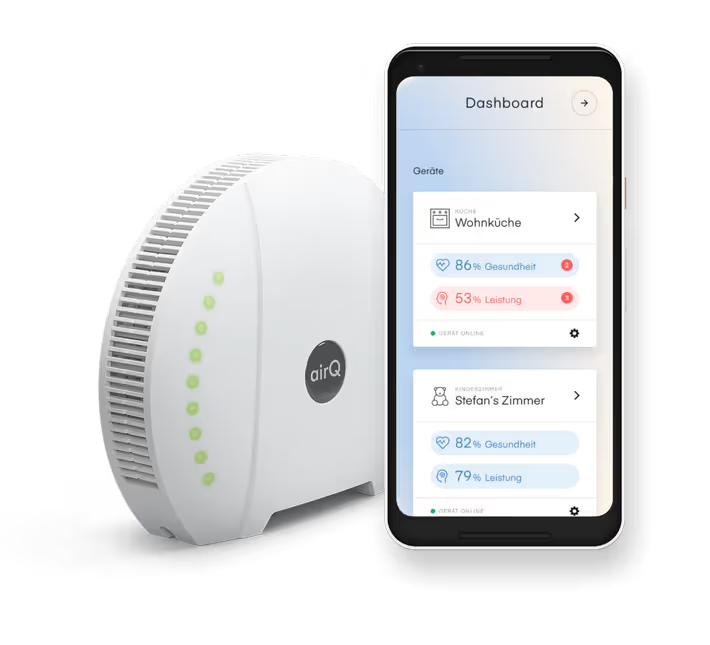
Allergies are immune system dysfunctions that manifest where our body comes into contact with the environment. Among the most common types of allergic reactions are asthma, allergic rhinitis (hay fever), allergic dermatitis (atopic dermatitis), and contact allergies. The air around us is one of the key factors affecting the well-being of people with allergies. This dysfunction of the immune system can be caused by various environmental factors. Environmental toxins, in particular, are suspected of causing allergies. Air pollutants are also among the triggers of allergies, causing pollen—which is actually harmless—to be suddenly classified as an infection. Antibodies are then produced. In all subsequent encounters with these harmless substances, the immune system reacts as if it had to fight off these foreign bodies. This then manifests as allergic reactions.

In Germany, nearly one in three people suffers from some form of allergy. The skin, mucous membranes, and respiratory tract are particularly prone to allergic reactions. Allergies can significantly impair quality of life and make those affected much more sensitive to the effects of air pollutants. The air-Q air analyzer provides timely warnings when allergens and poor air quality or critical conditions may trigger or intensify allergic reactions.

Air humidity that is too low damages the skin’s natural protective barrier and dries out the skin and mucous membranes. This not only promotes the development of eczema. Weakened mucous membranes are also irritated by pollutants and allergens, which can contribute to or even trigger allergies.

Many allergens enter the respiratory tract in the form of fine particles, thereby triggering allergic reactions. The symptoms of bronchial asthma and allergic rhinitis can also be exacerbated by various air pollutants, such as nitrogen dioxide or ozone.

Poor indoor air quality can reduce the ability to concentrate and thus increase the error rate. The resulting increase in stress intensifies psychological strain and ultimately increases susceptibility to allergic reactions.

The air-Q air analyzer provides timely alerts when allergens and poor air quality may trigger or intensify allergic reactions. It can also detect and prevent the potential spread of viruses, bacteria, and pathogens in a timely manner.
