
Laughing gas (nitrous oxide) (N₂O)
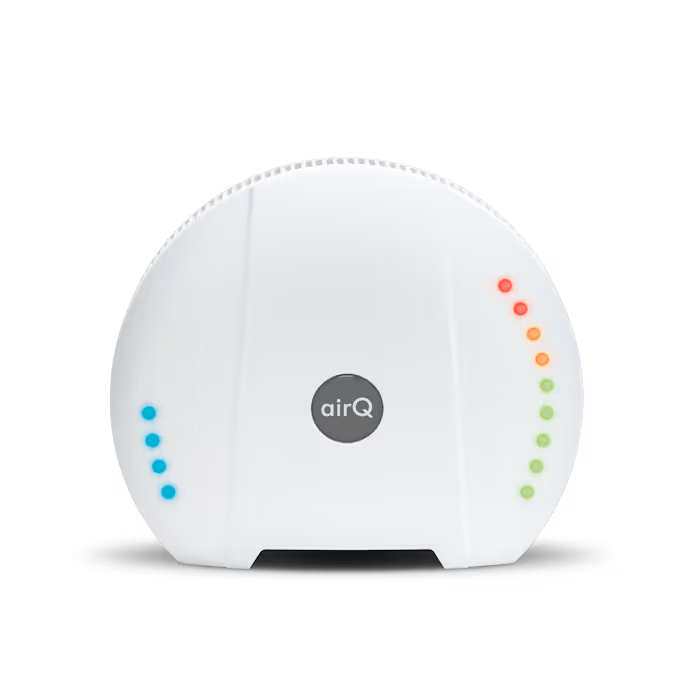
air-Q with a nitrous oxide sensor


Description:
Nitrous oxide is formed naturally through oxidation processes in the oceans and soil, from which it is released into the atmosphere. It is colorless and tasteless and dissolves well in cold water. It is not flammable on its own, but it promotes combustion because it can oxidize other substances.
The gas has an analgesic effect at a concentration of approximately 20% in the inhaled air. Higher concentrations have an anesthetic effect. For this reason, it is used in medicine, among other applications, as an anesthetic.
The name comes from the fact that patients under nitrous oxide anesthesia experience a euphoric state and laugh.
Nitrous oxide belongs to the group of nitrogen compounds, an element essential for healthy plant growth. For this reason, it is used on a large scale in industrial agriculture as a fertilizer. However, this has problematic effects on the environment: due to its long atmospheric lifetime, N₂O has a high global warming potential—about 300 times greater than that of carbon dioxide. Thus, it contributes significantly to global warming.
Nitrous oxide limit values:
Nitrous oxide is a greenhouse gas. Currently, there is no official limit for the concentration of nitrous oxide in outdoor air.
For jobs involving exposure to nitrous oxide, an occupational exposure limit (AGW) of 100 ppm applies.
| Denomination | Nitrous Oxide (N₂O) Limit Values |
| Occupational Exposure Limit (AGW) (DFG MAK) | 100 ppm (180 mg/m³) |
Consequences of a concentration that is too high:
When nitrous oxide is inhaled, an anesthetic effect sets in after a few seconds, accompanied by hallucinations, a sensation of warmth, and moments of euphoria. However, this state lasts only a few minutes.
Higher concentrations cause numbness and dizziness. Injuries from falls are possible.
At a concentration of 90% in inhaled air, loss of consciousness occurs, and there is a risk of brain damage due to lack of oxygen.
Frequent exposure to excessively high levels of N₂O in the air we breathe can, over the long term, damage internal organs and the nervous system.
If pure gas is abused as a recreational substance, it can cause confusion, nausea, a drop in blood pressure, and circulatory arrest.
Nitrous oxide cylinders should only be stored and used in well-ventilated areas, as there is otherwise a risk of asphyxiation. When filling with nitrous oxide, the cold temperature of the gas poses a risk of frostbite on contact surfaces (skin, mucous membranes).
Source of N₂O:
Nitrous oxide is formed through natural oxidation processes in the oceans and soil. But it also enters the atmosphere as a result of human activity through artificial fertilization: when the soil lacks oxygen, the nitrogen (NO₂) in the fertilizer loses oxygen and is converted into nitrous oxide. The gas is thus ultimately released into the atmosphere.
Nitrous oxide is produced artificially by the decomposition of ammonium nitrate or through a reaction between ammonia and nitric acid.
Nitrous oxide is used primarily in agriculture and medicine. However, the food industry also uses it because of its high solubility in fats; there, it is authorized as food additive E 942. In addition, nitrous oxide is used in propulsion technology, as its use allows engines to develop greater power.
Sensor used:
Nitrous oxide is measured using a sensor based on infrared absorption. The sensor's sensitivity allows it to detect even small changes in atmospheric concentration, within a range of ±100 µg/m³. There is no cross-sensitivity.
Measure nitrous oxide (laughing gas):
Use the air-Q air analyzer to measure nitrous oxide and other gases and indoor air pollutants in real time. The nitrous oxide sensor is available for purchase in the store.
More measured values / sensors